

Introduction
Have you ever experienced blurred vision while reading, headaches after using your mobile phone, or difficulty seeing clearly at night? Many people experience these problems but often ignore them, thinking they are caused by tiredness or excessive screen time.
However, some vision-related symptoms may indicate an underlying eye condition that needs medical attention. Identifying these signs early and consulting an eye specialist can help protect your eyesight.
Whether you are experiencing minor discomfort or noticeable changes in your vision, understanding when to visit an eye doctor is important.
In this article, we will discuss 10 common warning signs that should not be ignored and explain when you should consider getting your eyes examined.
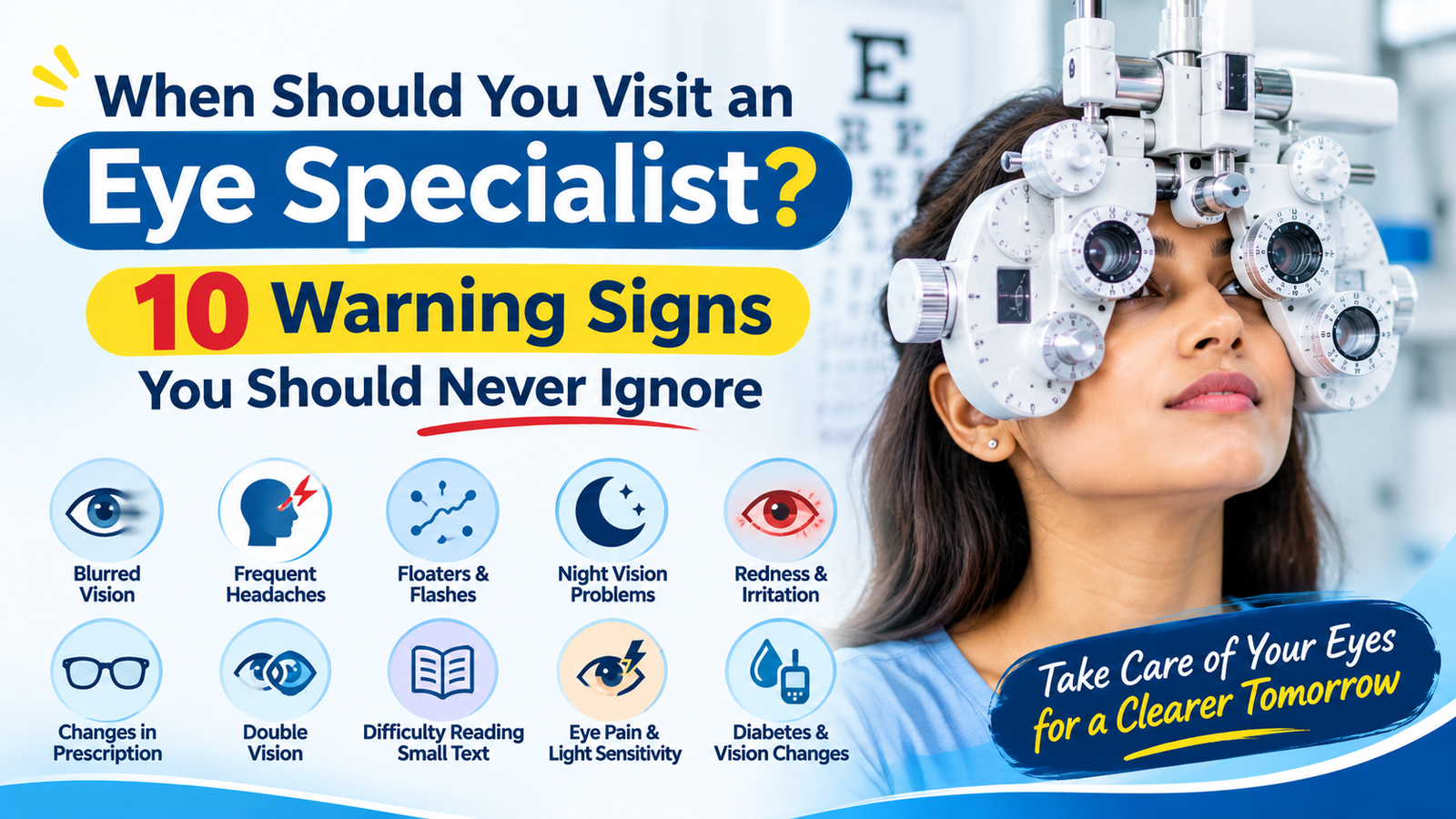
10 Warning Signs That You Should Visit an Eye Specialist
1. Blurred Vision While Reading or Looking at Objects
Do you sometimes struggle to read a book, recognise distant objects, or see things clearly even when wearing spectacles?
Blurred vision can occur for several reasons, including:
- Nearsightedness or farsightedness.
- Astigmatism.
- Cataracts.
- Certain retinal conditions.
- Other underlying eye problems.
If your vision remains unclear or becomes progressively worse, consult an eye specialist in Secunderabad for a comprehensive examination. Sudden vision changes need urgent medical attention.
2. Frequent Headaches After Using Digital Screens
Spending several hours looking at computers, smartphones, or tablets can cause digital eye strain.
You may experience:
- Headaches after working on a computer.
- Tired or heavy eyes.
- Difficulty focusing.
- Dryness or irritation.
- Temporary blurred vision.
Try taking regular breaks using the 20-20-20 rule: every 20 minutes, look at something approximately 20 feet away for at least 20 seconds.
If headaches or eye discomfort continue, consider getting your eyesight checked.
3. Seeing Small Spots or Flashes of Light
Have you ever noticed small black spots, thread-like shapes, or flashes of light moving across your vision?
These are commonly known as floaters and flashes.
Occasional floaters can be associated with normal age-related changes inside the eye. However, a sudden increase in floaters, repeated flashes, or a dark shadow across your vision may indicate a retinal tear or retinal detachment.
These symptoms require immediate eye evaluation. Do not wait for them to disappear on their own.
4. Difficulty Seeing Clearly at Night
Do you find it difficult to drive at night or recognise objects in dim lighting?
Night vision problems can make everyday activities uncomfortable and sometimes unsafe.
Common symptoms include:
- Difficulty seeing in low light.
- Glare from vehicle headlights.
- Halos around lights.
- Reduced clarity while driving at night.
Cataracts and certain retinal conditions can affect night vision. An eye specialist can examine your eyes and identify the underlying cause.
5. Frequent Eye Redness, Itching, or Irritation
Occasional eye irritation may happen because of allergies, dust, dryness, or environmental factors.
However, persistent redness or discomfort should not be ignored.
You may notice redness in one or both eyes, burning sensations, excessive watering, itching, or sensitivity to light.
If redness is accompanied by severe pain, blurred vision, or light sensitivity, seek urgent medical attention.
6. Frequent Changes in Your Spectacle Prescription
Have you recently noticed that your existing spectacles are no longer helping you see clearly?
Frequent changes in vision may be related to:
- Changes in refractive error.
- Age-related vision changes.
- Blood sugar fluctuations.
- Cataracts.
- Other eye conditions.
An eye examination helps determine whether your spectacle prescription needs updating or whether additional tests are required.
7. Seeing Double Images
Double vision, medically known as diplopia, occurs when you see two images of the same object.
It can affect one eye or both eyes and may make activities such as reading, walking, and driving difficult.
Possible causes include eye muscle problems, nerve-related conditions, and certain underlying medical conditions.
If you suddenly develop double vision, seek urgent medical evaluation, particularly if you also experience headaches, dizziness, weakness, or difficulty speaking.
8. Difficulty Reading Small Text or Focusing on Nearby Objects
Do you find yourself holding your mobile phone or newspaper farther away to read comfortably?
This can be a common sign of presbyopia, an age-related change that affects the eye’s ability to focus on nearby objects.
An eye specialist can assess your near and distance vision and recommend suitable corrective options.
9. Eye Pain or Sensitivity to Bright Light
Eye pain is not something you should ignore, especially when it occurs along with other symptoms.
You may experience pain inside or around the eyes, discomfort in bright sunlight, excessive watering, redness, or blurred vision.
These symptoms can occur due to inflammation, corneal problems, infections, or other eye conditions.
Severe or sudden eye pain, especially when accompanied by blurred vision, headache, nausea, or vomiting, requires immediate medical attention.
10. Changes in Vision If You Have Diabetes
People with diabetes need to pay special attention to their eye health.
High blood sugar levels can damage the small blood vessels in the retina, leading to a condition called diabetic retinopathy.
One important thing to remember is that diabetic retinopathy may not cause noticeable symptoms during its early stages.
As the condition progresses, you may experience blurred vision, dark spots or floaters, difficulty seeing clearly, or sudden changes in eyesight.
Regular comprehensive eye examinations are important for people with diabetes, even when their vision seems normal.
For more information about specialist eye care, explore the retina care services at EyeCure Hospital.
When Should You Visit an Eye Specialist?
Not every eye problem requires the same level of attention. Some symptoms can be monitored through a routine consultation, while others need immediate medical assessment.
Schedule an eye examination if you experience:
- Persistent blurred vision.
- Frequent headaches associated with vision problems.
- Difficulty reading or focusing.
- Repeated eye irritation.
- Gradual changes in your eyesight.
Seek urgent medical attention if you experience:
- Sudden loss of vision.
- A sudden increase in floaters or flashes.
- A curtain-like shadow in your vision.
- Severe eye pain.
- Sudden double vision.
Getting timely medical advice can help identify the cause and determine the appropriate treatment.
How Can You Keep Your Eyes Healthy?
Taking care of your eyes does not always require complicated changes to your daily routine. A few healthy habits can support your overall eye health.
- Take breaks from screens: Follow the 20-20-20 rule when using computers and mobile phones for extended periods.
- Eat a balanced diet: Include leafy vegetables, fruits, and other nutritious foods in your daily meals.
- Wear protective eyewear: Use suitable protective glasses during activities that may expose your eyes to injury.
- Maintain contact lens hygiene: Follow proper cleaning and wearing instructions provided by your eye care professional.
- Manage existing health conditions: Keep conditions such as diabetes under control with appropriate medical guidance.
- Schedule regular eye examinations: Follow the examination schedule recommended by your ophthalmologist.
Remember, healthy habits can support your vision, but they cannot replace professional eye examinations.
Where Can You Get an Eye Checkup in Secunderabad?
If you are experiencing vision problems or looking for professional eye care, choosing a hospital with appropriate eye examination and treatment facilities is important.
EyeCure Hospital, located in Trimulgherry, Secunderabad, offers specialised eye care services for patients with different vision-related concerns.
The hospital provides services related to:
- Cataract Care: Evaluation and treatment options for patients experiencing cloudy or blurred vision. Learn more about cataract treatment.
- Glaucoma Care: Assessment and management of glaucoma to help protect optic nerve health.
- Retina Care: Evaluation of retinal conditions and related vision problems. Explore retina care services.
- Cornea Care: Consultation and treatment for different corneal conditions.
- LASIK Services: Assessment for eligible patients considering laser vision correction.
You can also learn more about the hospital’s eye care services and its team of eye specialists.
If you are looking for an eye specialist in Secunderabad, contact EyeCure Hospital to enquire about consultations and available eye care services.
Visit EyeCure Hospital
Location: Trimulgherry, Secunderabad, Telangana
Website: https://eyecurehospital.com/
Eyecure Hospital Google maps : https://share.google/QwD6lLw9aI2wqGY2T
Contact: +91 95048 58687
Frequently Asked Questions About Visiting an Eye Specialist
1. How do I know if I need to visit an eye specialist?
If you experience persistent blurred vision, eye pain, redness, frequent headaches associated with vision problems, or difficulty seeing clearly, consider consulting an eye specialist. Sudden vision loss or new flashes and floaters require urgent medical attention.
2. How often should I get my eyes checked?
The frequency depends on your age, medical history, existing vision problems, and risk factors. Your ophthalmologist can recommend an appropriate examination schedule.
3. Can excessive mobile phone usage affect eyesight?
Extended screen use can contribute to digital eye strain, dryness, temporary blurred vision, and headaches. Taking regular breaks and maintaining a comfortable viewing distance can help reduce discomfort.
4. What are the early signs of cataracts?
Common symptoms include cloudy vision, glare from lights, difficulty seeing at night, faded colours, and frequent changes in spectacle prescriptions. An eye specialist can confirm the diagnosis through an examination.
5. Can glaucoma develop without symptoms?
Yes. Common forms of glaucoma can develop gradually without noticeable early symptoms. Regular eye examinations are important, particularly for people with increased risk.
6. Are floaters in the eyes normal?
Occasional floaters can be common, particularly with ageing. However, a sudden increase in floaters, flashes of light, or a shadow in your vision requires urgent eye evaluation.
7. Does diabetes affect eyesight?
Yes. Diabetes can damage the blood vessels in the retina and cause diabetic retinopathy. Regular comprehensive eye examinations are important, even if you do not notice vision changes.
8. When should I get my child’s eyes checked?
Children should have age-appropriate vision screening and eye examinations. Squinting, sitting very close to screens, frequent eye rubbing, or difficulty seeing the board at school may indicate a vision problem that needs assessment.
9. Where can I find an eye specialist in Secunderabad?
EyeCure Hospital in Trimulgherry, Secunderabad, provides eye care consultations and services related to cataracts, glaucoma, retina, cornea, and LASIK. Contact the hospital for consultation information.
10. Can regular eye checkups prevent vision loss?
Regular examinations can help identify certain eye conditions early, sometimes before symptoms appear. Early diagnosis and appropriate treatment can help reduce the risk of preventable vision loss.
Conclusion
Your eyesight is an important part of your everyday life, and even small changes in vision deserve attention. Whether you experience blurred vision, frequent headaches, eye irritation, or difficulty seeing at night, understanding the symptoms and seeking timely medical advice can make a difference.
Do not wait until vision problems start affecting your daily activities. Schedule an eye examination when recommended and follow your ophthalmologist’s advice to maintain healthy eyesight.
If you are looking for an eye hospital in Secunderabad, EyeCure Hospital in Trimulgherry is available for eye care consultations and specialised services.