

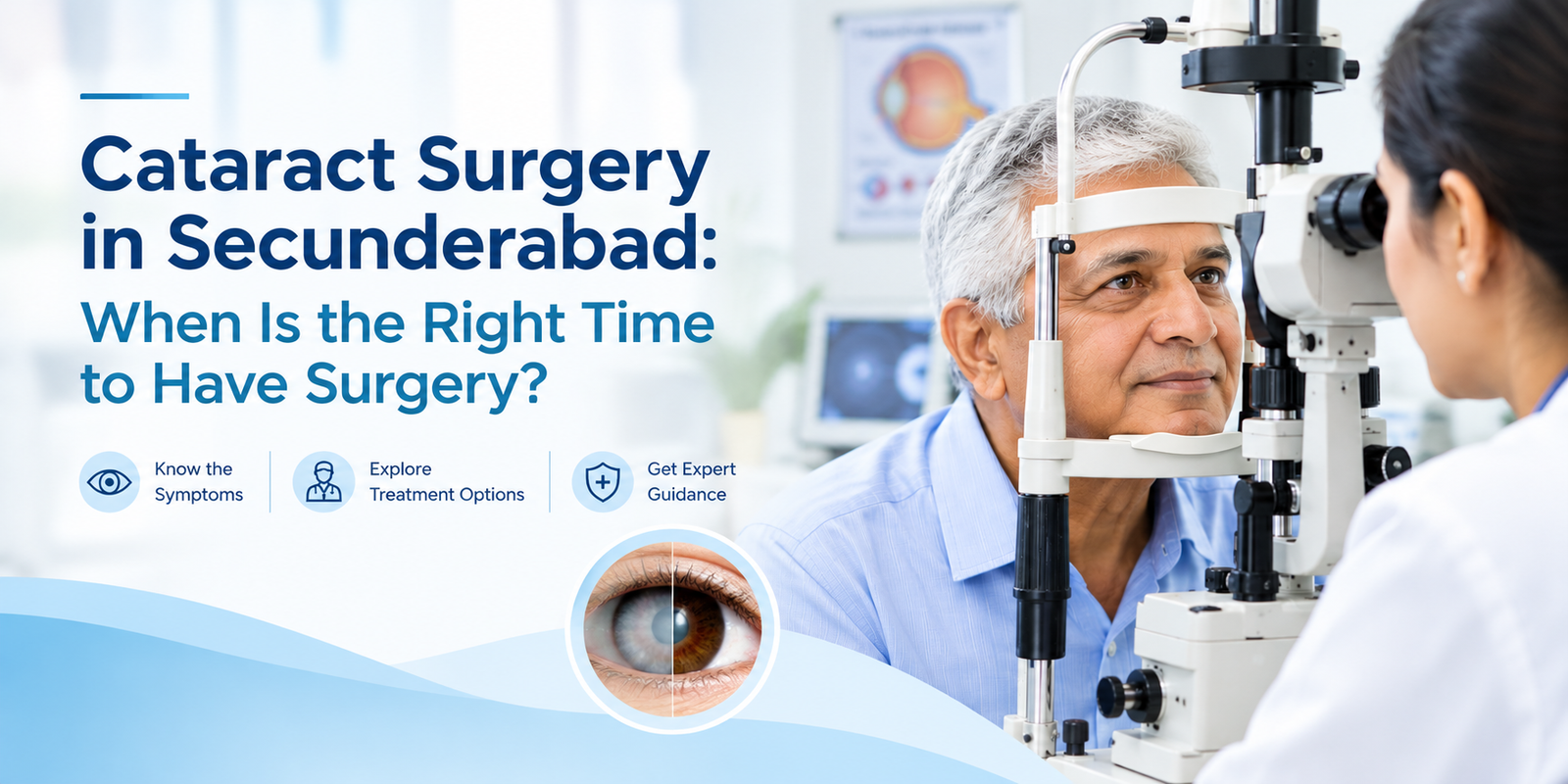
Cataracts are a common eye condition that can gradually affect vision, particularly as people get older. You may notice blurred vision, difficulty reading small text, faded colours or increased glare while driving at night. Although cataracts often develop slowly, knowing when to consider cataract surgery can help you make informed decisions about your eye health.
If you are searching for cataract surgery in Secunderabad, understanding the symptoms, treatment options and factors that influence surgery timing is an important first step. At EyeCure Hospital, patients can consult an eye specialist for cataract evaluation and guidance based on their individual vision needs.
What Is a Cataract?
A cataract develops when the natural lens inside the eye becomes cloudy. A healthy lens helps focus light onto the retina, allowing you to see clearly. When the lens becomes cloudy, light cannot pass through it properly, which can affect the quality of your vision.
Cataracts commonly develop with age, but they may also occur due to diabetes, eye injuries, certain medications or other eye conditions.
Common cataract symptoms include:
- Blurred or cloudy vision
- Difficulty seeing clearly at night
- Glare from sunlight or vehicle headlights
- Colours appearing faded or yellowish
- Difficulty reading even with adequate lighting
- Frequent changes in spectacle prescription
- Double or ghost images in one eye
If these symptoms begin affecting your everyday activities, arrange an eye examination to determine whether cataracts or another eye condition is responsible.
When Is the Right Time to Have Cataract Surgery?
There is no single age or fixed stage at which everyone needs cataract surgery. The right time depends on how much your vision is affected, your daily activities, the condition of your eyes and your ophthalmologist’s assessment.
1. When Blurred Vision Affects Daily Activities
If cloudy vision makes reading, cooking, recognising faces or performing routine tasks difficult, cataract surgery may be worth considering.
An eye specialist will assess whether the cataract is responsible for these difficulties and discuss the potential benefits and risks of surgery.
2. When Night Driving Becomes Difficult
Cataracts can increase glare from headlights and streetlights, making night driving uncomfortable or difficult. You may also notice reduced contrast or difficulty identifying objects in dim lighting.
If these symptoms affect your safety or confidence, consult an ophthalmologist for a detailed examination.
3. When New Spectacles No Longer Help Enough
Changing your spectacle prescription may temporarily improve vision in some people with early cataracts. However, spectacles cannot remove the cloudiness of the natural lens.
If your vision remains unsatisfactory despite an updated prescription, your eye doctor may recommend discussing cataract surgery.
4. When Cataracts Progress and Vision Continues to Decline
Cataracts can gradually become more advanced. Regular eye examinations help your ophthalmologist monitor changes and determine whether treatment is needed.
You do not necessarily need to wait until a cataract becomes fully mature. Surgery can be considered when vision problems meaningfully affect your quality of life or when other clinical factors make treatment appropriate.
5. When Another Eye Condition Requires Assessment or Treatment
Sometimes, a cataract interferes with the examination or treatment of other conditions, such as diabetic retinopathy. Your ophthalmologist may consider cataract surgery as part of a broader treatment plan.
The timing should be individualised, particularly if you have glaucoma, retinal disease or other medical conditions.
Is It Safe to Wait for Cataract Surgery?
Not every cataract requires immediate surgery. If your symptoms are mild and your daily activities are not significantly affected, your doctor may recommend monitoring your vision through regular examinations.
However, delaying surgery indefinitely may not be appropriate if your vision continues to deteriorate or your cataract becomes advanced. The decision should be based on your symptoms, eye examination and overall health rather than age alone.
Seek prompt medical attention if you experience sudden vision loss, severe eye pain, flashes of light or a sudden increase in floaters. These symptoms should not automatically be attributed to cataracts because they may indicate another urgent eye problem.
What Happens During Cataract Surgery?
Cataract surgery involves removing the cloudy natural lens and replacing it with an artificial intraocular lens (IOL).
One commonly used technique is phacoemulsification. During this procedure, the surgeon uses ultrasound energy to break up the cloudy lens before removing it through a small incision. An artificial lens is then placed inside the eye.
The procedure is commonly performed as day-care surgery, although the arrangements depend on the patient’s condition and the surgeon’s assessment.
Before surgery, the ophthalmologist evaluates your eyes, measures the eye to help select the appropriate lens power and reviews relevant medical conditions.
What Are the Different Types of Intraocular Lenses?
The choice of artificial lens is an important part of cataract surgery. Your eye specialist will explain which options may suit your vision requirements, eye measurements and budget.
Monofocal Lens
A monofocal lens provides clear focus at one main distance, commonly for distance vision. Reading glasses may still be required.
Multifocal Lens
A multifocal lens is designed to provide vision at more than one distance and may reduce dependence on spectacles for some activities. It is not suitable for everyone and can cause visual effects such as halos or glare in some patients.
Toric Lens
A toric lens can help correct corneal astigmatism in suitable patients. The need for this lens depends on detailed eye measurements.
Your ophthalmologist will explain the expected visual outcome, possible limitations and costs before you make a decision.
How Long Does It Take to Recover After Cataract Surgery?
Recovery varies from person to person. Many patients notice improvement in their vision within the first few days, while complete healing can take several weeks.
Your recovery plan may include:
- Using prescribed eye drops as instructed
- Attending scheduled follow-up appointments
- Avoiding rubbing or pressing on the operated eye
- Using protective eyewear when advised
- Following your surgeon’s instructions about exercise, lifting and other activities
Contact your eye surgeon promptly if you develop severe or worsening pain, significant redness or sudden deterioration in vision after surgery.
How to Choose an Eye Hospital for Cataract Surgery in Secunderabad
Choosing an eye hospital involves more than comparing treatment prices. Consider the following factors before deciding where to receive care.
Experienced ophthalmology team: Look for an eye specialist who can assess your condition, explain treatment options and answer your questions.
Preoperative eye assessment: Appropriate examination and eye measurements help the surgeon plan treatment and select a suitable intraocular lens.
Suitable surgical facilities: Ask about the surgical technique, available equipment, infection-control practices and postoperative arrangements.
Clear treatment information: Understand the proposed procedure, lens options, expected outcomes, possible complications and total estimated costs.
Follow-up care: Regular postoperative examinations help your doctor monitor healing and address complications if they occur.
If you are considering cataract surgery in Secunderabad, EyeCure Hospital provides cataract-related eye care services. An individual consultation can help determine whether surgery is appropriate for your condition.
Why Consider EyeCure Hospital for Cataract Evaluation?
EyeCure Hospital offers eye care services in Secunderabad, including cataract-related care. Patients can consult an eye specialist to discuss their symptoms, undergo an appropriate eye examination and understand the treatment options available to them.
Whether you are experiencing blurred vision, glare while driving or difficulty reading, an eye examination can help identify the cause and guide the next steps.
Learn more about cataract surgery in Secunderabad at EyeCure Hospital or explore the hospital’s eye care services.
Frequently Asked Questions About Cataract Surgery
1. At what age should cataract surgery be performed?
There is no fixed age for cataract surgery. It is generally considered when cataracts affect vision and daily activities, or when other clinical factors make surgery appropriate. An ophthalmologist can assess your individual needs.
2. Can cataracts be treated without surgery?
Early cataracts may be managed with monitoring, improved lighting or an updated spectacle prescription if these measures provide sufficient vision. However, surgery is the only established treatment that removes a cataract.
3. Should I wait until my cataract becomes mature?
Not necessarily. Surgery may be appropriate before a cataract becomes mature if vision problems interfere with daily activities or other medical considerations support treatment. Your ophthalmologist will recommend suitable timing.
4. Is cataract surgery painful?
Cataract surgery is commonly performed using local anaesthesia, often with anaesthetic eye drops. Patients may experience some pressure or mild discomfort, but the experience varies. Your surgeon will explain the anaesthesia and what to expect.
5. How many days does it take to recover from cataract surgery?
Many patients notice better vision within a few days, but healing and visual stabilisation can take several weeks. Follow your surgeon’s instructions and attend all scheduled appointments.
6. Can cataracts return after surgery?
The removed natural lens does not develop another cataract. However, the thin capsule supporting the artificial lens can become cloudy later, causing blurred vision. This condition is called posterior capsule opacification and may be treated with a YAG laser when indicated.
7. How do I find cataract surgery in Secunderabad?
Look for an eye hospital that offers comprehensive cataract evaluation, appropriate surgical facilities, suitable lens options and postoperative follow-up. EyeCure Hospital’s cataract surgery page provides further information about its cataract-related care.
Conclusion
The right time for cataract surgery depends on how cataracts affect your vision, comfort and everyday activities. While early cataracts may only require monitoring, persistent blurred vision, night-driving difficulties and problems with reading can indicate that it is time to discuss treatment with an ophthalmologist.
If you are experiencing cataract symptoms, arrange an eye examination rather than waiting for your vision to deteriorate significantly. EyeCure Hospital in Secunderabad can help you explore appropriate evaluation and treatment options based on your individual eye health.
Medical note: This article provides general educational information and does not replace a professional eye examination or personalised medical advice.