

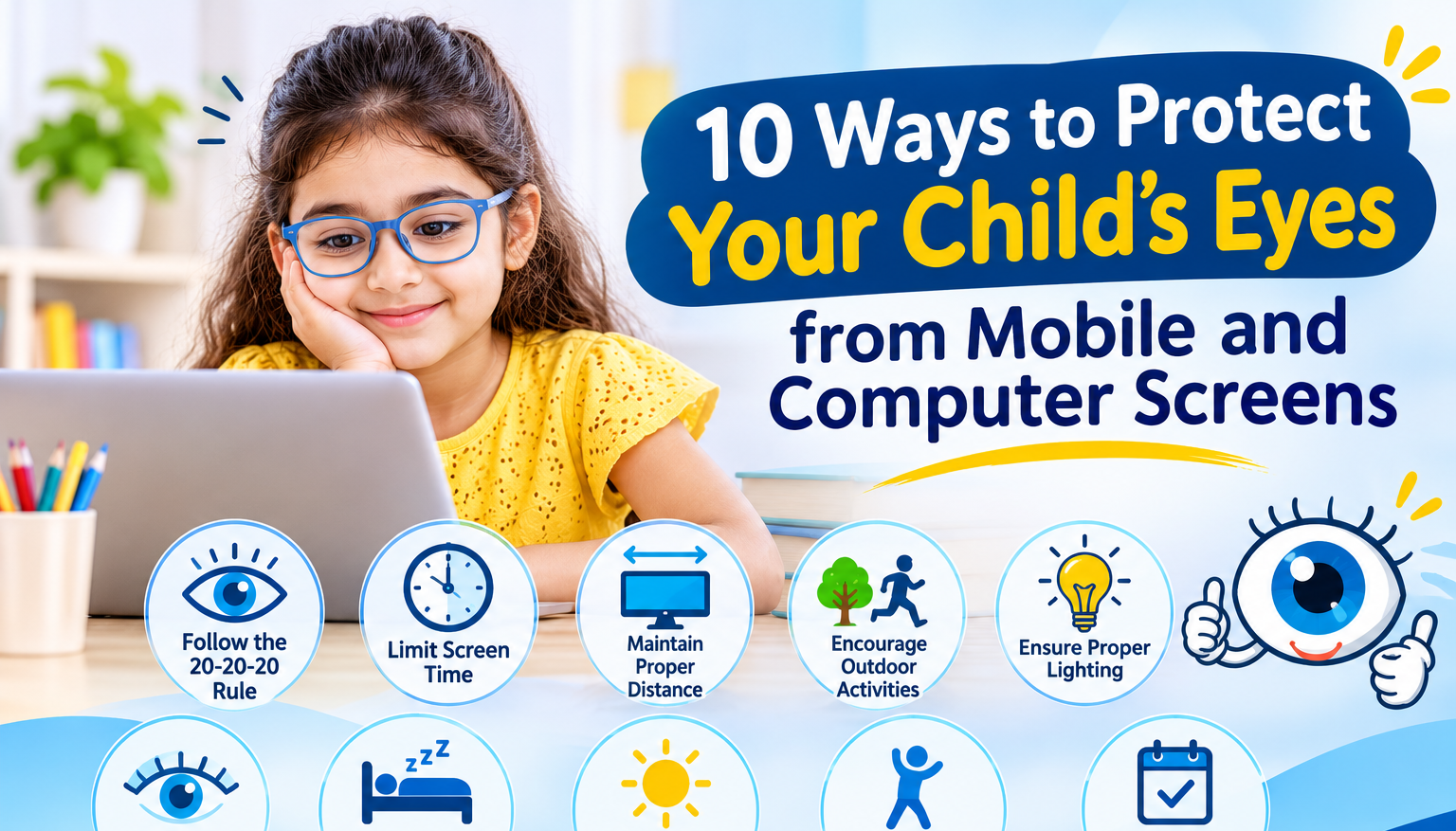
Children today spend a significant amount of time using mobile phones, tablets, computers, and televisions. From online classes and homework to gaming and entertainment, digital screens have become part of their everyday lives. However, excessive screen use without proper breaks and healthy habits can contribute to digital eye strain and discomfort.
Eyecure Parents in Secunderabad should pay attention to their children’s screen habits and encourage activities that support healthy vision. Simple changes in daily routines can help reduce eye discomfort and promote better eye health.
In this article, we explore 10 practical ways to protect your child’s eyes from mobile and computer screens and explain when to consult an eye care specialist.
How Does Excessive Screen Time Affect Children’s Eyes?
When children focus on digital screens for extended periods, they may blink less frequently and keep their eyes focused at a close distance. This can lead to digital eye strain.
Common symptoms include:
- Eye redness and irritation
- Dry or watery eyes
- Frequent eye rubbing
- Headaches after screen use
- Blurred vision
- Difficulty focusing
- Tired or uncomfortable eyes
Extended near work and limited outdoor activity may also be associated with an increased risk of developing or progressing myopia (short-sightedness) in children.
Parents can learn more about screen time and children’s eye health to understand why healthy digital habits are important.
10 Ways to Protect Your Child’s Eyes from Mobile and Computer Screens
1. Follow the 20-20-20 Rule
Encourage your child to follow the 20-20-20 rule while using digital devices.
After every 20 minutes of screen time, ask your child to look at an object approximately 20 feet away for at least 20 seconds.
This simple habit gives the eyes a break from continuous close-up focusing and may help reduce digital eye strain.
2. Limit Unnecessary Screen Time
Avoid allowing children to spend long periods using mobile phones or computers for entertainment.
Set reasonable screen-time limits according to your child’s age, school requirements, and daily routine. Encourage children to spend more time reading physical books, playing outdoor games, drawing, and participating in other activities.
You can also read our guide on screen time and children’s eye health for more information.
3. Maintain a Proper Distance from Screens
Holding mobile phones too close to the eyes may increase visual discomfort.
Encourage children to:
- Keep mobile phones at a comfortable viewing distance.
- Position computer screens approximately an arm’s length away.
- Keep the top of the computer screen at or slightly below eye level.
- Avoid lying down with a mobile phone close to the face.
Maintaining a comfortable distance can help children develop healthier screen-use habits.
4. Encourage Outdoor Activities
Outdoor activities are important for children’s overall health and eye development.
Encourage your child to spend time playing outside, walking, cycling, or participating in sports. Regular outdoor time is associated with a lower risk of developing myopia in children.
Instead of spending free time entirely on mobile phones or video games, encourage activities that involve looking at objects at different distances.
5. Ensure Proper Lighting
Using digital devices in dark rooms can make viewing uncomfortable.
Make sure your child’s study area has sufficient lighting. Avoid direct glare from windows or bright lights reflecting on computer screens.
Also, adjust the screen brightness according to the surrounding environment so that the display is comfortable to view.
6. Remind Your Child to Blink Frequently
Children often blink less frequently when concentrating on mobile phones, computers, or video games.
Reduced blinking can contribute to dry and irritated eyes.
Remind your child to blink normally while using digital devices. Encourage short breaks and avoid continuous screen viewing for extended periods.
If your child frequently experiences dryness or irritation, consult an eye care professional.
7. Avoid Screens Before Bedtime
Using mobile phones or tablets close to bedtime can interfere with a child’s sleep routine.
Encourage children to stop using digital devices before going to bed. Instead, introduce relaxing activities such as reading printed books, listening to stories, or spending time with family.
A consistent sleep schedule supports children’s overall health and well-being.
8. Adjust Screen Brightness and Text Size
Small text, excessive brightness, and poor screen contrast can make reading uncomfortable.
Make these simple adjustments:
- Increase text size when necessary.
- Maintain comfortable screen brightness.
- Use suitable contrast settings.
- Avoid unnecessary screen glare.
- Keep screens clean and free from smudges.
These adjustments can make digital devices easier for children to use.
9. Give Breaks During Online Classes
Online classes and digital homework can increase the amount of time children spend looking at screens.
Parents should encourage children to take short breaks between learning sessions. During breaks, children can walk around, stretch, drink water, or look at distant objects.
Where possible, balance digital learning with printed study materials and offline activities.
10. Schedule Regular Children’s Eye Checkups
Regular eye examinations help identify vision problems at an early stage.
Children may not always understand or communicate that they have difficulty seeing clearly. Watch for signs such as squinting, sitting very close to the television, frequent headaches, or difficulty reading.
Parents can use this eye health checklist for kids to become more aware of common signs that may require professional attention.
If your child experiences ongoing symptoms, arrange an eye examination with an eye care professional.
Warning Signs Parents Should Never Ignore
Parents should pay attention to changes in their children’s vision and everyday behaviour.
Consult an eye care specialist if your child:
- Frequently rubs their eyes.
- Complains of headaches after reading or screen use.
- Squints while watching television.
- Holds books or mobile phones very close to the face.
- Experiences blurred vision.
- Has difficulty reading the classroom board.
- Complains of recurring eye discomfort.
You can also read about the signs your child needs an eye check-up to understand when professional evaluation may be needed.
When Should You Consult an Eye Specialist in Secunderabad?
Occasional eye discomfort after screen use may improve with breaks and healthier viewing habits. However, persistent symptoms should not be ignored.
Consider consulting an eye care professional if your child experiences repeated headaches, blurred vision, eye strain, difficulty focusing, or other changes in vision.
An eye examination can help identify refractive errors and other vision concerns. The specialist can recommend appropriate treatment, corrective lenses, or further evaluation depending on your child’s needs.
Parents looking for children’s eye care in Secunderabad should choose a qualified eye care provider for proper assessment and guidance.
Children’s Eye Care at EyeCure Hospital, Secunderabad
Protecting children’s vision starts with awareness, healthy daily habits, and timely eye examinations.
At EyeCure Hospital, Secunderabad, parents can consult the eye care team regarding their children’s eye health concerns and seek professional guidance on vision-related symptoms.
If your child experiences frequent eye strain, headaches, blurred vision, or difficulty seeing clearly, consider scheduling an eye examination.
Early evaluation can help identify vision concerns and support appropriate eye care.
Frequently Asked Questions (FAQs)
1. How does mobile screen time affect children’s eyes?
Excessive screen use may cause digital eye strain, dry eyes, headaches, blurred vision, and eye discomfort. Children should take regular breaks and maintain healthy screen habits.
2. What is the 20-20-20 rule for children’s eyes?
The 20-20-20 rule recommends looking at an object approximately 20 feet away for 20 seconds after every 20 minutes of screen use. It can help reduce eye strain associated with prolonged near work.
3. Can excessive mobile use cause weak eyesight in children?
Prolonged near work and limited outdoor time are associated with an increased risk of myopia in children. Screen use alone does not explain every case, so regular eye examinations are important.
4. How can parents reduce digital eye strain in children?
Parents can encourage regular screen breaks, proper viewing distance, frequent blinking, comfortable lighting, outdoor activities, and reasonable screen-time limits.
5. Are blue-light glasses necessary for children?
Blue-light glasses are not routinely necessary for every child who uses digital devices. Proper screen habits, comfortable lighting, regular breaks, and adequate sleep are important. Consult an eye care professional if your child experiences persistent discomfort.
6. How often should children have an eye examination?
The recommended frequency depends on the child’s age, vision history, symptoms, and risk factors. Follow the advice of an eye care professional and arrange an examination whenever vision concerns arise.
7. Where can I consult an eye specialist in Secunderabad?
Parents can consult an eye care provider in Secunderabad for professional evaluation of their child’s vision concerns. EyeCure Hospital is an option to contact for eye care guidance.
Conclusion
Children’s increasing use of mobile phones, tablets, and computers makes eye health awareness more important than ever. Following simple habits such as the 20-20-20 rule, maintaining a proper screen distance, taking regular breaks, and encouraging outdoor activities can help reduce digital eye strain.
Parents should also watch for warning signs and arrange regular eye examinations to identify possible vision problems early.
For children’s eye care in Secunderabad, consult a qualified eye care professional and take the right steps to support your child’s healthy vision.
Medical Disclaimer: This article is intended for general educational purposes only. It does not replace professional medical advice, diagnosis, or treatment. Consult an eye care professional for concerns about your child’s vision.