

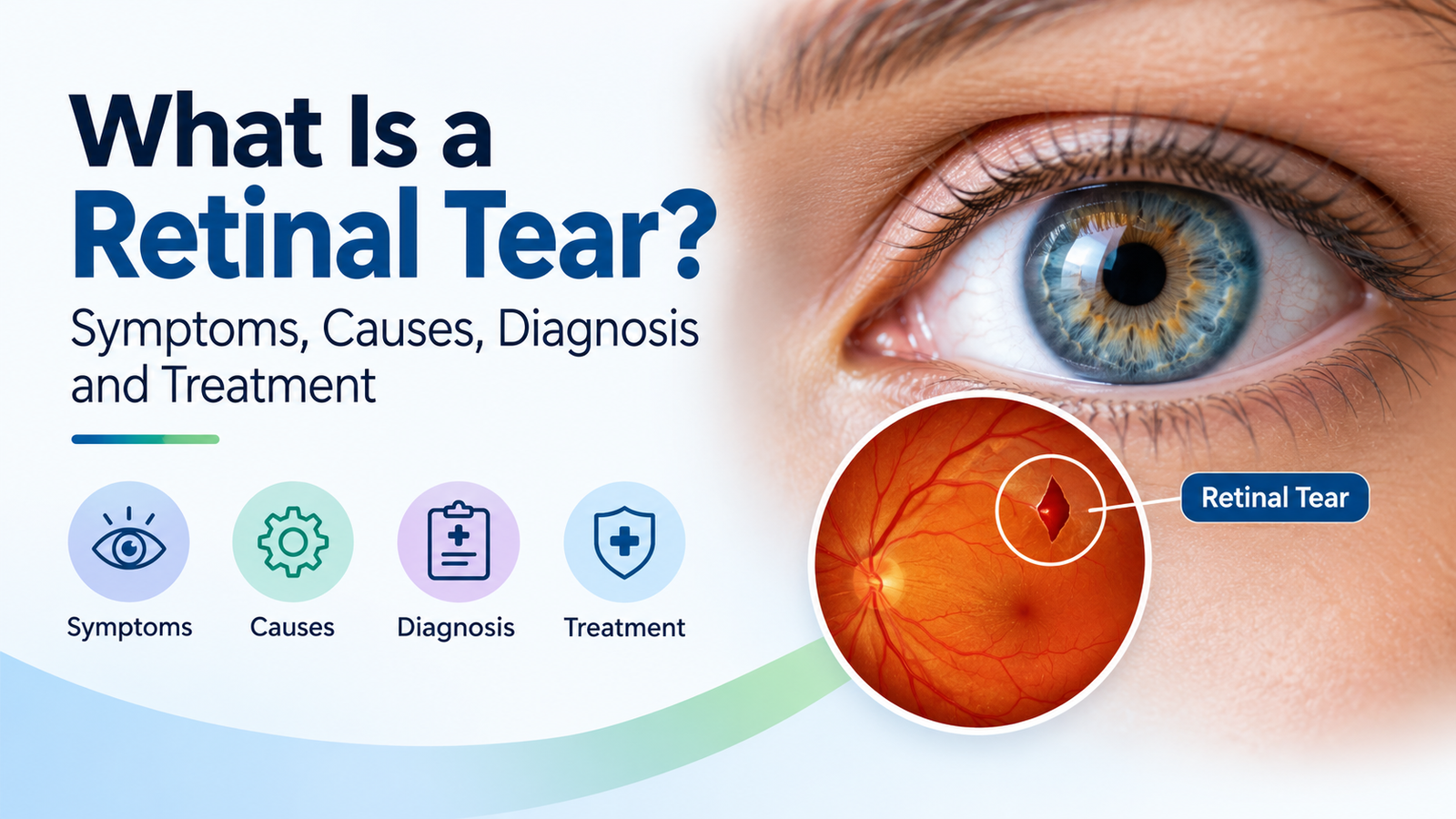
A sudden flash of light, a new group of floaters, or an unexpected change in your vision can sometimes indicate a retinal tear. Although a retinal tear may not cause pain, it requires urgent assessment by an ophthalmologist because it can lead to retinal detachment and potentially permanent vision loss.
The retina is a light-sensitive layer at the back of the eye that helps you see clearly. When a tear develops in this tissue, fluid can pass through the opening and separate the retina from the tissue underneath it.
Understanding retinal tear symptoms, causes, diagnosis, and treatment options can help you recognise when to seek medical attention. At EyeCure Hospital, patients can learn more about retinal conditions and available care through the retina care service.
Important: If you suddenly notice flashes of light, many new floaters, a dark shadow, or a curtain-like effect across your vision, seek emergency eye care immediately. Do not wait for symptoms to improve.
What Is a Retinal Tear?
A retinal tear is a break or opening in the retina, the thin layer of tissue responsible for detecting light and sending visual signals to the brain.
As the eye ages, the vitreous, a gel-like substance inside the eye, can shrink and pull away from the retina. If the vitreous remains attached to certain areas, this pulling force may create a tear.
A retinal tear is different from retinal detachment. A tear is an opening in the retinal tissue, whereas retinal detachment occurs when the retina separates from the underlying tissue. Fluid passing through a tear can cause this separation.
Early diagnosis is important because appropriate treatment of a retinal tear can help reduce the risk of retinal detachment.
What Are the Symptoms of a Retinal Tear?
Retinal tear symptoms may appear suddenly, although some tears produce few or no noticeable symptoms.
Common warning signs include:
1. New Floaters in Your Vision
Floaters may look like small black dots, threads, cobwebs, or moving specks. A sudden increase in floaters can indicate changes in the vitreous or a retinal problem that needs urgent assessment.
2. Flashes of Light
Brief flashes or lightning-like streaks, particularly at the edges of your vision, may occur when the vitreous pulls on the retina.
Although flashes can have other causes, new flashes should be evaluated promptly to rule out a retinal tear.
3. Blurred or Reduced Vision
Some people experience blurred vision or a sudden reduction in their ability to see clearly. This can be a warning sign of a retinal complication and requires urgent medical evaluation.
4. A Shadow or Curtain Across Your Vision
A dark shadow or curtain moving across part of your vision can indicate retinal detachment. This requires immediate emergency eye care.
5. Visual Changes After an Eye Injury
An injury to the eye or head can damage the retina. New floaters, flashes, or changes in vision after an injury should be assessed urgently.
Remember: A retinal tear can occur without pain. The absence of discomfort does not rule out a serious retinal problem.
What Causes a Retinal Tear?
A retinal tear commonly develops when the vitreous pulls on the retina. However, certain conditions and circumstances can increase the risk.
Age-Related Vitreous Changes
As people grow older, the vitreous gel can change in consistency and separate from the retina. This process is common, but in some cases, the pulling force can cause a tear.
High Myopia
People with high myopia, also known as severe nearsightedness, have an increased risk of retinal tears because their eyes may have structural changes that make the retina more vulnerable.
Previous Eye Surgery
Certain eye surgeries, including cataract surgery, are associated with an increased risk of retinal complications. New flashes, floaters, or visual changes after surgery should never be ignored.
Eye Trauma
A direct blow to the eye or a significant head injury can cause retinal damage. Protective eyewear can help reduce the risk of injuries during sports and other high-risk activities.
Previous Retinal Tear or Detachment
People who have experienced a retinal tear or detachment in one eye may have an increased risk of retinal problems in the other eye.
Family History and Retinal Weakness
A family history of retinal detachment and certain weak areas in the retina can increase the risk of developing a tear.
Having these risk factors does not mean a retinal tear will definitely occur. An ophthalmologist can assess your individual risk and recommend appropriate monitoring.
How Is a Retinal Tear Diagnosed?
A retinal tear is usually diagnosed through a comprehensive eye examination, particularly a dilated retinal examination.
Dilated Fundus Examination
The ophthalmologist uses eye drops to widen the pupils and examines the retina with specialised instruments. This allows the doctor to look for retinal tears, weak areas, bleeding, and signs of retinal detachment.
Review of Symptoms and Medical History
Your doctor may ask when the symptoms began, whether they are getting worse, and whether you have high myopia, previous eye surgery, an eye injury, or a history of retinal problems.
Additional Eye Tests
If the retina cannot be examined clearly, or if further assessment is required, the ophthalmologist may recommend additional tests, such as an ocular ultrasound or retinal imaging.
A standard glasses prescription test alone cannot reliably rule out a retinal tear. A detailed retinal examination is essential when warning symptoms are present.
What Is the Treatment for a Retinal Tear?
The treatment for a retinal tear depends on its location, appearance, associated symptoms, and the risk of retinal detachment.
The ophthalmologist determines the appropriate approach after examining the retina.
1. Laser Photocoagulation
Laser photocoagulation is a commonly used treatment for suitable retinal tears.
During the procedure, the ophthalmologist directs a medical laser around the tear. The laser creates small areas of scarring that help secure the retina to the underlying tissue, reducing the risk of fluid passing through the opening and causing retinal detachment.
Laser treatment is often performed without hospital admission. The doctor will explain what to expect during the procedure and provide instructions for recovery.
2. Cryopexy or Freezing Treatment
Cryopexy uses a specialised freezing probe to create a sealing effect around the retinal tear. It may be recommended when the tear’s location or other clinical factors make freezing treatment appropriate.
Like laser treatment, cryopexy aims to create a secure attachment around the tear and reduce the risk of retinal detachment.
3. Surgery for Retinal Detachment
If retinal detachment has already occurred, laser treatment alone may not be sufficient. Depending on the extent and location of the detachment, the ophthalmologist may recommend a surgical procedure.
Possible procedures include:
- Pneumatic retinopexy: A gas bubble is placed inside the eye to help position the retina while the tear is sealed.
- Scleral buckle surgery: A specialised band is placed around the outside of the eye to support the affected area of the retina.
- Vitrectomy: The vitreous gel is removed so the surgeon can treat the retinal problem and help the retina return to its proper position.
These procedures are used for selected cases of retinal detachment, not routinely for every retinal tear.
Some retinal breaks may be monitored rather than treated immediately, depending on their characteristics and the ophthalmologist’s assessment. Never delay an examination to determine whether a suspected tear needs treatment.
For more information about retinal conditions and available treatments, visit EyeCure Hospital
Recovery depends on the treatment performed and whether the retina has detached.
After laser treatment or cryopexy, your ophthalmologist will explain the expected recovery period, any activity restrictions, and the timing of follow-up examinations.
If surgery is necessary, recovery may take longer and could involve additional instructions, depending on the procedure.
To support recovery:
- Follow your ophthalmologist’s instructions carefully.
- Use prescribed eye drops or medicines as directed.
- Attend all recommended follow-up appointments.
- Ask your doctor when you can safely return to exercise, driving, and heavy lifting.
- Report any new flashes, floaters, shadows, or reduced vision immediately.
Even after treatment, new symptoms require prompt assessment. Treatment of an existing tear does not eliminate the possibility of developing another retinal problem.
Can a Retinal Tear Be Prevented?
Not every retinal tear can be prevented, particularly those caused by age-related changes inside the eye. However, appropriate eye care and early detection can help reduce the risk of serious complications.
Consider these precautions:
- Arrange regular eye examinations if you have high myopia or a history of retinal problems.
- Follow your ophthalmologist’s advice about retinal monitoring.
- Wear protective eyewear during activities that could cause eye injuries.
- Attend recommended follow-up visits after eye surgery.
- Seek urgent eye care if you notice sudden flashes, new floaters, or a shadow across your vision.
Routine examinations are particularly important for people with known retinal risk factors. Your ophthalmologist can recommend the appropriate examination schedule for your needs.
When Should You Visit an Eye Hospital for a Retinal Tear?
You should seek emergency eye care if you experience sudden flashes of light, a sudden increase in floaters, a curtain-like shadow, or a sudden reduction in vision.
These symptoms can indicate a retinal tear or retinal detachment. Prompt examination helps the ophthalmologist identify the cause and determine whether immediate treatment is needed.
EyeCure Hospital provides retina care in Secunderabad, including assessment of retinal conditions and retinal laser treatment. You can learn more about the available services on the EyeCure Hospital retina page.
If you experience sudden visual changes, do not wait for a routine appointment or rely on home remedies. Seek emergency eye care immediately.
Frequently Asked Questions About Retinal Tears
1. Can a retinal tear heal on its own?
A retinal tear should not be assumed to heal on its own. Depending on its characteristics, it may require laser treatment, cryopexy, or specialist monitoring. An ophthalmologist should determine the appropriate course of action.
2. Is a retinal tear painful?
A retinal tear is usually painless. Symptoms may include flashes of light, new floaters, or changes in vision. A lack of pain does not mean the condition is harmless.
3. Can a retinal tear cause permanent vision loss?
A retinal tear can lead to retinal detachment, which may cause permanent vision loss if not treated promptly. Early assessment and appropriate treatment can help reduce this risk.
4. What is the difference between a retinal tear and retinal detachment?
A retinal tear is a break in the retina. Retinal detachment occurs when the retina separates from the underlying tissue. Fluid can pass through a tear and cause detachment.
5. Is laser treatment necessary for every retinal tear?
No. Many acute, symptomatic retinal tears require prompt treatment, but management depends on the type and location of the tear and the clinical findings. Some retinal breaks may be monitored by an ophthalmologist.
6. Can a retinal tear occur without symptoms?
Yes. Some retinal tears may not cause noticeable symptoms. People with risk factors should follow their ophthalmologist’s recommendations for retinal examinations.
7. When should I seek emergency care for flashes or floaters?
Seek emergency eye care if you suddenly notice flashes of light, many new floaters, a dark curtain or shadow, or reduced vision. These symptoms may indicate a retinal tear or detachment.
Protect Your Vision With Timely Retinal Care
A retinal tear is a serious eye condition that requires prompt evaluation. Recognising warning signs, understanding the available treatments, and attending follow-up examinations can help reduce the risk of vision-threatening complications.
If you have concerns about your retinal health, consult an ophthalmologist for an appropriate examination. Eye Hospital in Secunderabad provides retina care to help patients receive assessment and treatment based on their individual needs.
Medical disclaimer This article is for educational purposes only and does not replace a professional eye examination, diagnosis, or personalised medical advice. The final content should be reviewed by a qualified ophthalmologist before publication.