

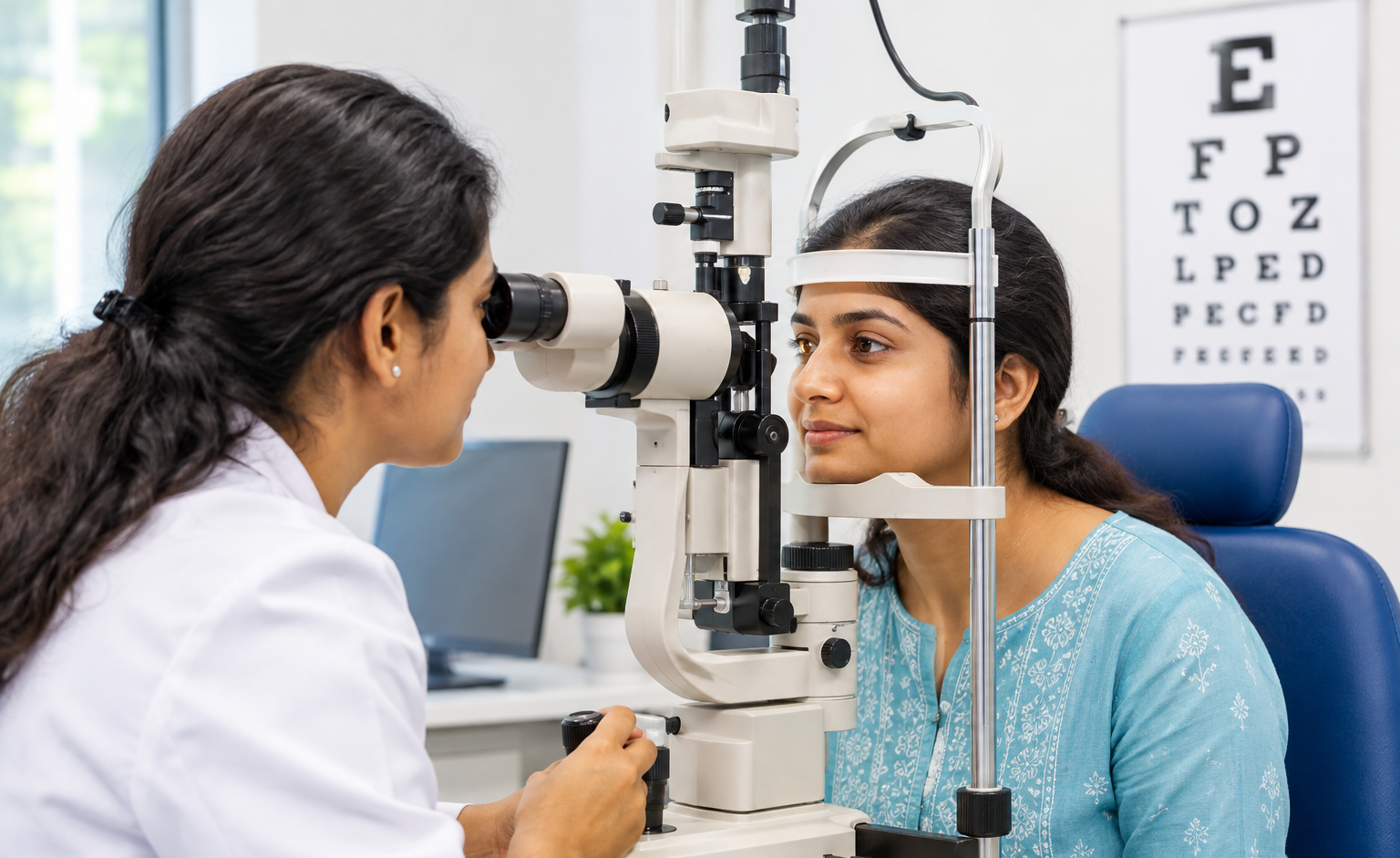
Good eyesight is important for everyday activities, including reading, driving, working and learning. However, many people visit an eye hospital only when they notice blurred vision, headaches or discomfort. Regular eye examinations can help identify changes in vision and detect signs of certain eye conditions.
If you are looking for an eye checkup in Secunderabad, understanding the examination process can help you know what to expect during your consultation.
EyeCure Hospital in Trimulgherry provides eye care services across general examinations and specialist eye care. Patients can explore the available eye care services at EyeCure Hospital and consult an ophthalmologist based on their individual needs.
What Is an Eye Examination?
An eye examination is an assessment performed by an ophthalmologist to evaluate your eyesight and examine the health of your eyes.
Depending on your symptoms, age and medical history, the examination may include visual acuity assessment, checking refractive errors and examining the visible structures of the eye.
The purpose is not just to check whether you need spectacles but also to identify signs that may require further medical evaluation.
What Tests Are Included in a General Eye Checkup?
The tests recommended during an eye examination depend on the patient’s condition. EyeCure Hospital’s website lists the following under its General Examination services.
1. Slit Lamp Examination
A slit lamp examination allows an eye specialist to examine the structures at the front of the eye using magnification and focused light.
It helps the doctor observe structures such as the cornea, conjunctiva and lens. This examination can help identify visible abnormalities and signs of certain eye conditions.
2. Autorefractor Test
An autorefractor is an instrument used to estimate the refractive error of the eyes.
It helps assess common vision problems such as:
- Myopia (short-sightedness)
- Hyperopia (long-sightedness)
- Astigmatism
The results provide an initial measurement of refractive error. The eye specialist may perform additional assessments before recommending a spectacle prescription.
Not every patient requires the same tests. Your ophthalmologist will decide which examinations are suitable for you.
You can find more information about the hospital’s listed facilities on its Services page.
7 Signs You Should Not Ignore
Certain vision changes and eye symptoms should not be ignored. Consider consulting an eye specialist if you experience:
1. Frequent Blurred Vision
Difficulty seeing distant objects, reading text or focusing on nearby objects may indicate a refractive error or another eye problem.
2. Frequent Headaches
Repeated headaches, particularly after reading or using digital screens, may sometimes be associated with uncorrected vision problems.
If you experience discomfort after prolonged mobile or computer use, read more about mobile screen time and its effects on eye health.
3. Difficulty Seeing at Night
Difficulty seeing in low-light conditions or increased glare while driving at night should be evaluated by an eye specialist.
4. Persistent Eye Redness
Ongoing redness, irritation, watering or discomfort may indicate an underlying eye condition that needs medical attention.
5. Frequent Changes in Spectacle Power
If your vision continues to change or your current spectacles no longer provide clear vision, an eye examination can help identify the reason.
6. Eye Pain or Discomfort
Persistent eye pain, sensitivity to light or unexplained discomfort should be assessed by an ophthalmologist.
7. Sudden Changes in Vision
Sudden vision loss, new flashes of light, a sudden increase in floaters or a curtain-like shadow across your vision requires urgent medical evaluation. Do not wait for a routine appointment.
For more information, read our guide on warning signs that indicate you should visit an eye doctor.
Why Are Regular Eye Checkups Important?
Regular eye examinations help you understand changes in your eyesight and identify certain eye health concerns.
Some conditions, including glaucoma, may develop without noticeable symptoms in the early stages. An eye specialist can recommend appropriate examinations based on your risk factors and medical history.
Regular checkups are particularly important for:
- Children experiencing difficulty reading or seeing the classroom board.
- Adults who spend long hours working on computers.
- People who wear spectacles or contact lenses.
- Older adults experiencing changes in their eyesight.
- People with diabetes or a family history of eye diseases.
The frequency of examinations depends on individual eye health needs.
Which Eye Specialist Should You Consult?
Different eye conditions require evaluation by an ophthalmologist with relevant expertise.
Depending on your symptoms, you may need consultation for:
- Cataract: Clouding of the natural lens that can cause blurred or hazy vision. Learn more about cataract surgery and when it may be needed.
- Retina conditions: Problems affecting the light-sensitive tissue at the back of the eye.
- Cornea conditions: Problems affecting the transparent front surface of the eye.
- Refractive errors: Vision problems such as myopia, hyperopia and astigmatism.
The eye specialist will evaluate your symptoms and recommend suitable investigations or treatment.
Where Can You Get an Eye Checkup in Secunderabad?
If you are searching for an eye hospital in Secunderabad, EyeCure Hospital in Trimulgherry provides eye care services across general examinations, cataract care, management, cornea and refractive care, and retina care.
The hospital lists Slit Lamp Examination and Autorefractor testing under its General Examination services.
Patients can consult the ophthalmology team to understand their eye health concerns and enquire about the examinations and treatments currently available.
For an eye checkup in Secunderabad, contact EyeCure Hospital to enquire about consultation availability.
Location: Trimulgherry, Secunderabad
Visit the EyeCure Hospital website for further information.
Frequently Asked Questions
1. What is included in a routine eye checkup?
A routine eye checkup may include an assessment of visual clarity and an examination of the eye structures. Depending on your symptoms, the ophthalmologist may recommend additional tests.
2. How often should I get my eyes checked?
The frequency depends on your age, medical history, vision problems and risk factors. Your eye specialist can recommend an appropriate examination schedule.
3. Does an autorefractor test give an accurate spectacle prescription?
An autorefractor provides an initial estimate of refractive error. The ophthalmologist may perform additional testing before confirming your spectacle prescription.
4. What is the purpose of a slit lamp examination?
A slit lamp examination allows an ophthalmologist to examine the front structures of the eye under magnification and focused illumination.
5. Where can I get an eye checkup in Secunderabad?
You can contact EyeCure Hospital in Trimulgherry, Secunderabad, to enquire about general eye examinations and specialist consultations.
Conclusion
Your eyesight deserves regular attention, even when you do not experience noticeable problems. An eye examination can help identify changes in vision and determine whether further evaluation is necessary.
If you experience blurred vision, frequent headaches, eye discomfort or other vision-related concerns, consult an ophthalmologist.
For an eye checkup in Secunderabad, contact EyeCure Hospital to enquire about available examination services and appointments.