

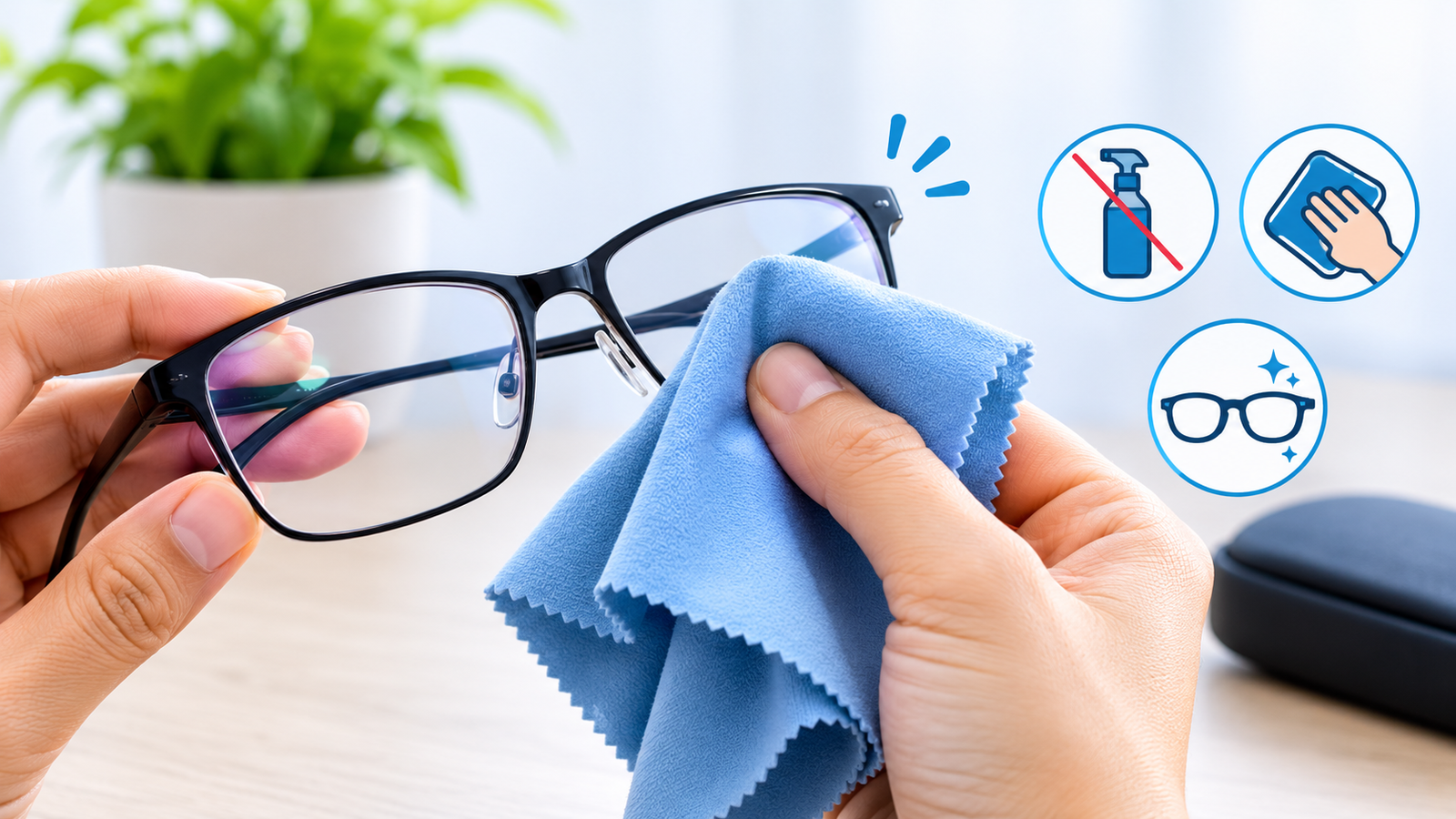
Eyeglasses help you see clearly, but dirty lenses, fingerprints, dust and smudges can affect your vision throughout the day. Cleaning your glasses incorrectly can also damage lens coatings and cause scratches over time.
Whether you wear prescription glasses, reading glasses or computer glasses, following the correct cleaning method can help maintain clear vision and extend the life of your eyewear.
In this guide, learn how to clean eyeglasses properly, which cleaning products to use, what mistakes to avoid and how to prevent scratches.
Why Is It Important to Clean Your Eyeglasses Regularly?
Your eyeglasses collect dust, oil, sweat, fingerprints and other particles during everyday activities. These deposits can make your lenses appear cloudy and affect visual comfort.
Regular cleaning helps to:
- Maintain clear and comfortable vision.
- Remove dust, fingerprints and oily marks.
- Reduce the buildup of dirt on lenses and frames.
- Keep your glasses hygienic.
- Protect lens coatings by avoiding improper cleaning methods.
Cleaning your glasses correctly is just as important as cleaning them regularly.
How to Clean Eyeglasses Properly: Step-by-Step Guide
The safest way to clean most eyeglasses is to use clean water, a small amount of mild lotion-free dishwashing liquid and a clean microfiber cloth.
Follow these steps:
Step 1: Wash Your Hands
Before touching your lenses, wash your hands with soap and water. This removes oil, dirt and other particles that could transfer onto your glasses.
Dry your hands using a clean, lint-free towel.
Step 2: Rinse Your Glasses with Lukewarm Water
Hold your glasses under a gentle stream of lukewarm water. This helps remove loose dust and particles that could scratch the lenses during wiping.
Avoid using hot water because high temperatures may damage certain lens coatings or frame materials.
Step 3: Apply a Small Amount of Mild Dishwashing Liquid
Place a small drop of lotion-free, mild dishwashing liquid on your fingertips. Gently clean both sides of the lenses, the nose pads and the frame.
Avoid using strong detergents or products containing harsh chemicals.
Step 4: Rinse Thoroughly
Rinse your glasses under clean, lukewarm water until all soap residue is removed. Soap left on the lenses can create marks when the glasses dry.
Step 5: Dry with a Microfiber Cloth
Gently dry your glasses using a clean microfiber cloth specifically designed for eyewear.
Avoid using paper towels, tissues or clothing because they may contain fibres or particles that can scratch the lenses.
What Is the Best Way to Clean Glasses Without Scratching Them?
Preventing scratches starts with using the right cleaning materials and techniques.
Follow these simple eyeglass cleaning tips:
- Always rinse lenses before wiping them.
- Use a clean microfiber cloth.
- Handle your glasses by the frame.
- Avoid wiping dry lenses when dust or dirt is present.
- Store your glasses in a protective case when not in use.
- Clean your microfiber cloth regularly.
- Use an eyewear cleaning solution that is suitable for your lens type.
Remember that scratches cannot usually be removed by ordinary cleaning. If your lenses have visible scratches, consult an optical professional about whether replacement is necessary.
What Should You Avoid When Cleaning Your Eyeglasses?
Using the wrong cleaning materials can damage your lenses and their protective coatings.
Avoid these common mistakes:
1. Cleaning Glasses with Your Shirt
Your shirt may look clean, but it can contain dust and small particles that may scratch your lenses.
2. Using Paper Towels or Tissues
Paper products may have rough fibres that can cause scratches, especially when used on dry lenses.
3. Using Household Glass Cleaners
Window cleaners and other household cleaning products may contain chemicals that are unsuitable for eyeglass lenses and their coatings.
4. Using Hot Water
Hot water can damage certain lens coatings and affect some frame materials. Always use lukewarm water.
5. Wiping Lenses Without Rinsing
Rubbing dust or dirt directly against the lens surface can create scratches. Rinse your glasses first.
How Often Should You Clean Your Glasses?
For most people, cleaning eyeglasses once a day is a good routine. However, you may need to clean them more frequently if you work outdoors, exercise regularly or notice fingerprints and dust on your lenses.
| Situation | Recommended action |
|---|---|
| Everyday use | Clean once daily |
| After exercise | Clean when sweat or dirt accumulates |
| Outdoor activities | Rinse and clean when dusty |
| Visible fingerprints | Clean when needed |
| Before storing | Ensure glasses are clean and dry |
Avoid excessive rubbing. Use the correct cleaning method whenever your glasses need attention.
How to Maintain Different Types of Eyeglass Lenses
Different lenses may have special coatings or care requirements. Always follow the cleaning instructions provided by your eyewear professional or lens manufacturer.
Anti-Reflective Coated Lenses
Anti-reflective coatings help reduce reflections and improve visual comfort. Use a suitable lens-cleaning solution and a clean microfiber cloth. Avoid harsh chemicals and abrasive materials.
Blue Light Filter Lenses
Blue light filter lenses should be cleaned using the same gentle method recommended for your particular lens material and coating. Avoid strong cleaning products.
Photochromic Lenses
Photochromic lenses adjust their tint depending on light conditions. Clean them gently with lukewarm water and a suitable cleaning solution to protect their surface.
Prescription Lenses
Prescription lenses may include different coatings and materials. Follow the cleaning instructions provided by your optician to maintain their condition.
How to Prevent Scratches on Eyeglasses
Scratches can affect the appearance of your lenses and may interfere with comfortable vision. These habits can help reduce the risk of damage:
- Keep your glasses inside a protective case when not wearing them.
- Never place your glasses with the lenses facing down.
- Use both hands when putting on or removing your glasses.
- Avoid keeping glasses loose in handbags or pockets.
- Keep your glasses away from excessive heat.
- Clean lenses with suitable materials only.
- Do not use damaged or dirty microfiber cloths.
Even scratch-resistant lenses are not completely scratch-proof. Careful handling is important.
When Should You Consider an Eye Check-Up?
Dirty lenses can cause temporary visual discomfort, but persistent blurry vision may have other causes.
Consider consulting an eye specialist if you experience:
- Blurred vision even after cleaning your glasses.
- Frequent headaches while wearing your spectacles.
- Difficulty seeing clearly at a distance or nearby.
- Eye strain during reading or computer use.
- A sudden change in your vision.
- Discomfort or difficulty adjusting to a new prescription.
An eye examination can help identify whether your prescription needs updating or whether another eye condition requires attention.
At Eye Hospital in Secunderabad, patients can explore available eye care services and consult an eye care professional for concerns about their vision.
Learn more about EyeCure Hospital and its eye care services.
Frequently Asked Questions About Cleaning Eyeglasses
1. What is the safest way to clean eyeglasses?
The safest general method is to rinse your glasses with lukewarm water, apply a small amount of mild lotion-free dishwashing liquid, rinse thoroughly and dry with a clean microfiber cloth.
2. Can I clean my glasses with water only?
Yes. Rinsing with clean water helps remove loose dust and particles. However, water alone may not remove oily fingerprints. A small amount of mild dishwashing liquid can help remove grease.
3. Can I use hand sanitizer to clean my glasses?
No. Hand sanitizers may contain alcohol and other ingredients that can damage certain lens coatings or frame materials. Use an eyewear-safe cleaning solution instead.
4. How can I remove oily marks from my eyeglasses?
Rinse your glasses with lukewarm water and gently clean them using a small amount of mild lotion-free dishwashing liquid. Rinse thoroughly and dry with a clean microfiber cloth.
5. Do microfiber cloths scratch eyeglasses?
A clean, soft microfiber cloth designed for eyewear is generally safe. However, a dirty cloth can contain dust and particles that may scratch lenses. Wash the cloth regularly according to its care instructions.
6. Can scratches be removed from eyeglass lenses?
Most scratches cannot be safely removed through ordinary cleaning. Avoid using toothpaste, baking soda or household polishing products. Ask an optical professional whether the lenses need replacement.
7. How many times should I clean my glasses daily?
Cleaning your glasses once a day is generally sufficient for everyday use. You can clean them more often when they become dirty, sweaty or covered with fingerprints.
8. Why do my glasses look cloudy even after cleaning?
Cloudiness may result from leftover cleaning residue, accumulated oils, damaged lens coatings or scratches. If proper cleaning does not improve clarity, consult an optical professional.
9. Is it safe to use lens-cleaning sprays?
Yes, provided the spray is specifically designed for eyeglasses and is compatible with your lens coatings. Follow the manufacturer’s instructions.
10. When should I replace my eyeglasses?
Consider having your glasses checked if the lenses are significantly scratched, your frames are damaged, your prescription has changed or you continue experiencing vision difficulties.
Conclusion
Cleaning your eyeglasses properly is a simple daily habit that helps maintain clear vision and protect your lenses. Always rinse away dust before wiping, use suitable cleaning products and dry your glasses with a clean microfiber cloth.
Avoid household cleaners, paper towels and rough fabrics that may damage lens coatings or cause scratches. If your glasses remain cloudy or your vision is unclear even after cleaning, consult an eye care professional.
For more information about eye health and available treatments, visit Eye Hospital, Secunderabad.