
Introduction
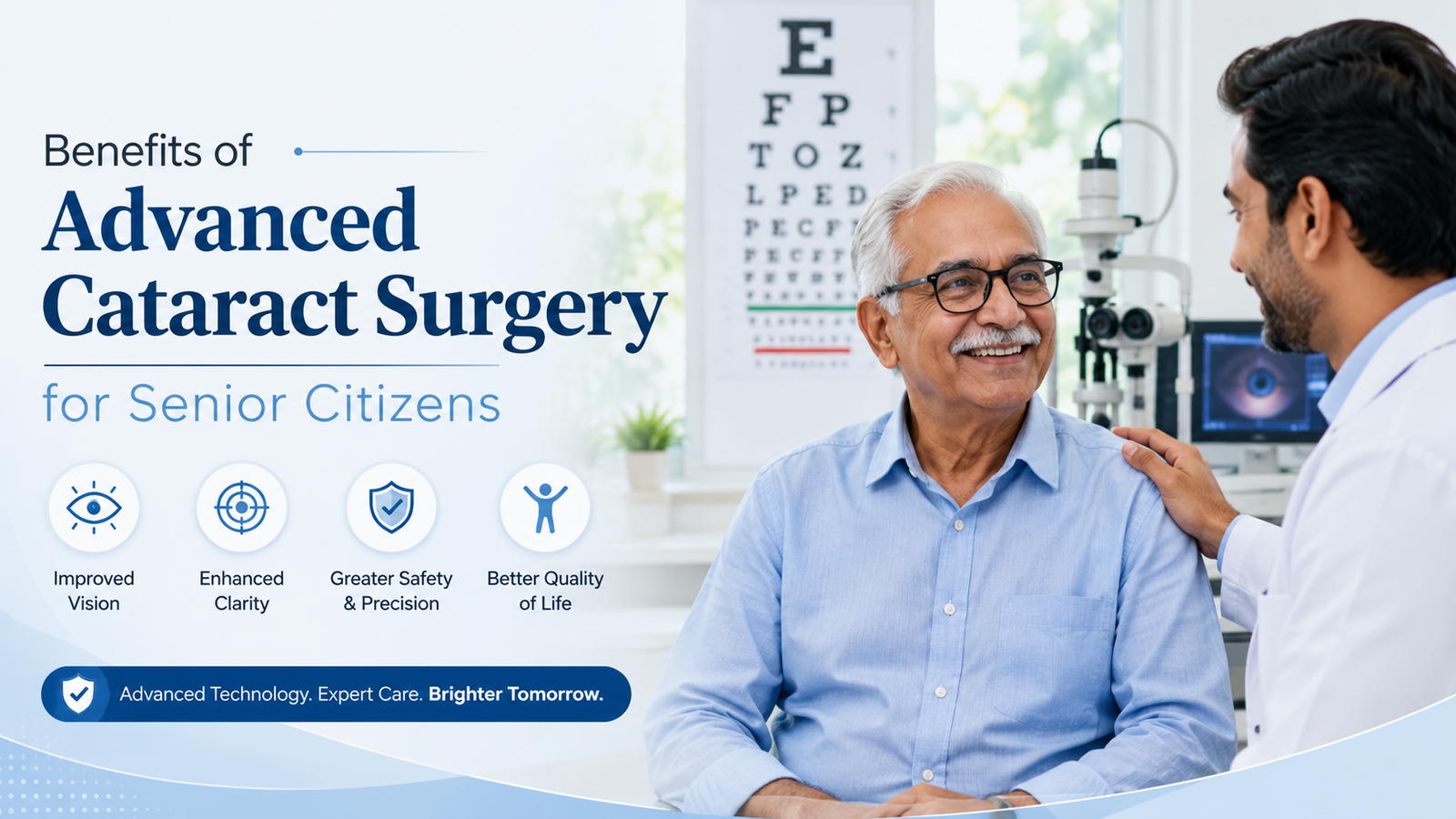
If you or a loved one is experiencing blurry vision, difficulty driving at night, or faded colours cataracts may be the cause. Advanced cataract surgery is today one of the safest, most effective procedures available for senior citizens, restoring clear vision and dramatically improving quality of life. At Eyecure, recognized as one of the best eye hospitals in Secunderabad and the surrounding Hyderabad region, we combine cutting-edge technology with compassionate care to help seniors see the world clearly again.
This comprehensive guide covers everything you need to know about advanced cataract surgery — from what it is, to its key benefits, expert tips, costs, and frequently asked questions.
Quick Answer: What Are the Main Benefits of Advanced Cataract Surgery for Seniors?
Featured Snippet Answer: Advanced cataract surgery for senior citizens restores clear vision, reduces dependence on glasses, lowers the risk of falls and accidents, improves mental health, and enhances overall quality of life. Modern techniques such as phacoemulsification and laser-assisted cataract surgery (LACS) make the procedure highly safe, minimally invasive, and typically completed in under 30 minutes with rapid recovery.
What Is Advanced Cataract Surgery?
A cataract is the clouding of the eye’s natural lens the transparent structure that sits behind the iris and pupil. Over time, proteins in the lens break down and clump together, making vision hazy, dim, or distorted. Cataracts are the leading cause of preventable blindness worldwide, particularly affecting those over the age of 60.
Advanced cataract surgery refers to modern, minimally invasive techniques used to remove the clouded natural lens and replace it with a clear, artificial intraocular lens (IOL). Unlike traditional methods that required large incisions and longer recovery, today’s procedures use:
- Phacoemulsification (Phaco Surgery): Ultrasound waves break up the cataract for easy removal through a tiny incision.
- Laser-Assisted Cataract Surgery (LACS / Femtosecond Laser): A laser makes precise incisions and softens the cataract before removal — ideal for patients at the best eye hospital for laser treatment.
- Micro-incision Cataract Surgery (MICS): Uses incisions smaller than 2mm for faster healing and reduced astigmatism risk.
- Premium IOL Implants: Multifocal, trifocal, and toric lenses correct vision at multiple distances and even address pre-existing astigmatism.
If you are searching for a lasik hospital near me or a trusted eye care centre in Alwal, Eyecure offers all these advanced modalities under one roof.
Why Is Advanced Cataract Surgery Important for Senior Citizens?
Seniors above 60 are disproportionately affected by cataracts. According to the World Health Organization (WHO), cataracts account for 51% of global blindness cases, affecting approximately 65.2 million people. In India alone, it is estimated that 7.5 million new cataract cases emerge each year.
For senior citizens, untreated cataracts can lead to:
- Increased fall risk — Poor vision is a leading cause of falls in seniors, which can result in hip fractures and hospitalization.
- Loss of independence — Difficulty driving, reading, or recognizing faces forces dependence on family members.
- Depression and social isolation — Visual impairment is strongly linked to cognitive decline and mental health challenges.
- Accelerated cataract progression — Delaying surgery allows the cataract to harden (“hypermature”), making surgery more complex.
Choosing the best eye care hospital in Hyderabad for timely surgical intervention is therefore not just a vision decision it is a life-quality decision.
Key Benefits of Advanced Cataract Surgery for Senior Citizens
1. Dramatic Restoration of Vision
The most immediate benefit is clear, sharp vision. Most patients report significantly improved eyesight within 24–48 hours of surgery. Colours appear more vibrant, contrast is enhanced, and the visual “fog” lifts almost instantly.
2. Reduced Dependence on Glasses
With premium IOL implants (multifocal or extended-depth-of-focus lenses), many seniors can read, drive, and use screens without prescription glasses for the first time in years.
3. Lower Risk of Falls and Fractures
Studies published in the Journal of the American Medical Association (JAMA) confirm that cataract surgery reduces the risk of hip fractures in seniors by up to 34% — directly attributable to better visual acuity and spatial awareness.
4. Improved Mental Health and Cognitive Function
Research from the American Academy of Ophthalmology found that seniors who underwent cataract surgery showed reduced rates of depression and anxiety, and a 29% lower risk of developing dementia.
5. Enhanced Independence and Quality of Life
Seniors can resume driving, reading, cooking, and social activities independently — significantly improving self-confidence and emotional well-being.
6. Better Management of Existing Eye Conditions
Cataract removal allows eye specialists to monitor the retina and optic nerve more effectively, aiding in the early detection and management of glaucoma, diabetic retinopathy, and age-related macular degeneration (AMD).
7. Correction of Astigmatism
Toric IOLs, available at advanced centres like Eyecure among the top eye hospitals near me in Bowenpally can simultaneously correct astigmatism during cataract surgery, saving the patient from additional procedures.
8. Quick, Painless Procedure with Rapid Recovery
Modern cataract surgery is performed under topical anaesthesia (eye drops only), takes 20–30 minutes, and requires no hospital stay. Most patients return to light activities within 24 hours.
9. Long-Lasting Results
Intraocular lenses do not degrade or cloud over time. Once implanted, the results are essentially permanent, unlike glasses or contact lenses that require regular updates.
10. High Safety Profile
Advanced cataract surgery has a success rate of over 98% in experienced hands. Complication rates at premier eye hospitals in Karkhana and the broader Hyderabad region are exceptionally low when performed by qualified ophthalmologists.
Detailed Guide: What to Expect at Eyecure’s Advanced Cataract Surgery Centre
Step 1 – Comprehensive Eye Evaluation
Before surgery, Eyecure’s specialists conduct a thorough pre-operative assessment including:
- Visual acuity testing
- Slit-lamp biomicroscopy
- Corneal topography
- Biometry (A-scan) for precise IOL power calculation
- Retinal evaluation
Step 2 – Choosing the Right Intraocular Lens (IOL)
| IOL Type | Best For | Glasses After Surgery |
|---|---|---|
| Monofocal IOL | Distance vision | Reading glasses needed |
| Multifocal IOL | Distance + near vision | Often glasses-free |
| Trifocal IOL | Distance + intermediate + near | Glasses-free for most tasks |
| Toric IOL | Astigmatism correction | Reduces astigmatism |
| EDOF (Extended Depth of Focus) | Seamless range of vision | Minimal glasses dependency |
Step 3 – The Surgery
- Administered under topical or local anaesthesia
- A micro-incision (less than 3mm) is made in the cornea
- The cataract is emulsified using ultrasound (Phaco) or laser (LACS)
- The IOL is folded and inserted through the same tiny incision
- No stitches required in most cases
Step 4 – Recovery and Post-Operative Care
- Day 1: Rest at home; protective eye shield worn at night
- Week 1: Avoid water contact, rubbing, and heavy lifting
- Week 2–4: Gradual return to full activities
- Prescribed eye drops for up to 4 weeks to prevent infection and inflammation
Comparison Table: Traditional vs. Advanced Cataract Surgery
| Feature | Traditional Surgery | Advanced (Phaco/LACS) |
|---|---|---|
| Incision Size | 10–12 mm | 2–3 mm |
| Anaesthesia | General or injection | Eye drops only |
| Duration | 45–60 minutes | 20–30 minutes |
| Hospital Stay | 1–2 days | Day care (same day) |
| Recovery Time | 4–6 weeks | 1–2 weeks |
| Astigmatism Correction | No | Yes (Toric IOL) |
| Stitches Required | Yes | No |
| Vision Quality | Standard | High-definition |
| Safety | Moderate | Very high (98%+ success) |
Common Mistakes to Avoid When Choosing Cataract Surgery
- Delaying surgery unnecessarily — A harder, more mature cataract is more difficult to remove and carries higher surgical risk.
- Choosing a facility based on cost alone — Technology, surgeon experience, and post-operative care matter far more than price.
- Not disclosing full medical history — Diabetes, hypertension, and blood thinners all affect surgical planning.
- Skipping post-operative follow-ups — Essential for detecting early complications like posterior capsule opacification (PCO).
- Rubbing the eye after surgery — A common mistake that can displace the IOL or cause infection.
- Ignoring the second eye — Most seniors have bilateral cataracts; delaying the second eye surgery reduces overall benefit.
Expert Tips from Eyecure’s Ophthalmologists
Dr. Recommendation 1: “We always advise seniors to have a dilated eye examination annually after 55. Early-stage cataracts can be monitored; surgery should be considered when vision begins affecting daily activities.”
Dr. Recommendation 2: “Premium IOLs are a worthwhile investment for active seniors who want to stay glasses-free. Discuss your lifestyle — including hobbies like reading, driving, and sports — with your surgeon before choosing your lens.”
Dr. Recommendation 3: “LACS (Femtosecond Laser Cataract Surgery) offers unmatched precision in complex cases, including dense cataracts and post-LASIK eyes.”
Additional expert tips:
- Maintain blood sugar control before surgery (especially for diabetic patients)
- Arrange a companion for the day of surgery
- Use prescribed antibiotic and anti-inflammatory drops as directed
- Wear UV-protective sunglasses post-surgery
Latest Trends in Advanced Cataract Surgery — 2026
- AI-Guided IOL Power Calculation: Artificial intelligence platforms (such as Hill-RBF and Barrett Universal II) now improve refractive accuracy to within ±0.5D in over 92% of cases.
- Light-Adjustable Lenses (LAL): Post-operative non-invasive UV light adjustment allows surgeons to “fine-tune” refractive outcomes after the lens is implanted.
- Robotic Cataract Surgery: Early-stage robotic assistance is improving incision consistency in high-volume centres.
- Dropless Cataract Surgery: Sustained-release intracameral antibiotics and anti-inflammatories eliminate the need for post-operative eye drops.
- Extended Depth of Focus (EDOF) Lenses: New-generation EDOF IOLs provide a natural, continuous range of vision with fewer halos than traditional multifocals.
- Telemedicine Follow-Up: Virtual post-op consultations are now standard at leading centres, reducing travel burdens for senior patients.
Case Study: Real-Life Example from Eyecure, Hyderabad
Patient: Mrs. Lakshmi R., 68 years, retired school teacher, Secunderabad
Complaint: Difficulty reading, glare while driving at night, frequent prescription changes in the past two years.
Diagnosis: Grade III nuclear cataract in both eyes, with mild astigmatism in the right eye.
Treatment at Eyecure:
- Right eye: Phacoemulsification + Toric Multifocal IOL implant
- Left eye: Phacoemulsification + Multifocal IOL implant (performed 2 weeks later)
Outcome:
- Post-operative visual acuity: 6/6 (right) and 6/9 (left) without glasses
- Patient resumed reading without spectacles within 3 weeks
- Night driving significantly improved
- Reported dramatic improvement in self-confidence and independence
“I had stopped driving 2 years ago. Now I drive my grandchildren to school every morning. Eyecure gave me my life back.” — Mrs. Lakshmi R.
People Also Ask (PAA) — Featured Snippet Ready
Q1: At what age should senior citizens consider cataract surgery?
A: Cataract surgery is recommended when visual impairment begins affecting daily activities such as reading, driving, or watching television — typically between ages 60–75. Age itself is not a barrier; what matters is the patient’s overall health and the density of the cataract.
Q2: Is cataract surgery safe for elderly patients above 80?
A: Yes. Advanced cataract surgery is safe even for patients in their 80s and 90s. A thorough pre-operative evaluation ensures that any cardiovascular or systemic risk factors are managed appropriately. The procedure is performed under local anaesthesia and does not require general anaesthesia.
Q3: How long does cataract surgery take?
A: Modern cataract surgery (phacoemulsification) typically takes 20–30 minutes per eye. The day-care procedure involves minimal discomfort, and patients can return home within a few hours.
Q4: Can cataracts come back after surgery?
A: No. Once the natural lens is removed and replaced with an IOL, the cataract cannot return. However, some patients develop “posterior capsule opacification” (PCO) — a cloudiness of the membrane behind the IOL — which is easily and painlessly corrected with a 5-minute YAG laser procedure.
Q5: What is the difference between LASIK and cataract surgery?
A: LASIK reshapes the cornea to correct refractive errors (myopia, hyperopia, astigmatism) and is primarily for younger patients. Cataract surgery removes the clouded natural lens and replaces it with an IOL. Both are available at Eyecure, the top-rated lasik hospital near me and cataract centre in Hyderabad.
Q6: Is cataract surgery covered under health insurance in India?
A: Yes. Most standard health insurance policies in India cover cataract surgery, especially when there is documented vision impairment. Cashless facilities are available at empanelled hospitals like Eyecure.
Q7: How do I find the best eye hospital for cataract surgery near me in Hyderabad?
A: Look for hospitals with NABH accreditation, experienced vitreoretinal and cataract surgeons, advanced phaco machines, premium IOL options, and positive patient reviews. Eyecure, with centres accessible to patients searching for eye hospitals in Karkhana, top eye hospitals near me in Bowenpally, and eye care centre in Alwal, meets all these criteria.
Q8: What is the recovery time after advanced cataract surgery?
A: Most patients experience significant visual improvement within 24–48 hours. Full recovery, with complete stabilization of vision, typically occurs within 4–6 weeks. Light activities can be resumed the next day.
Q9: Can both eyes be operated on at the same time?
A: Standard practice is to operate on one eye at a time, with a 1–2 week gap between eyes. This allows assessment of the first outcome before proceeding and reduces bilateral complication risk.
Q10: What should I look for in an eye hospital for cataract surgery in Secunderabad?
A: Prioritize hospitals with experienced cataract surgeons, state-of-the-art phacoemulsification and laser equipment, a comprehensive range of IOL options (including premium lenses), and dedicated post-operative care. Eyecure is consistently rated among the best eye hospitals in Secunderabad for exactly these reasons.
Q11: Are there risks associated with cataract surgery for diabetic patients?
A: Diabetic patients can safely undergo cataract surgery when blood sugar levels are well-controlled. Pre-operative retinal evaluation is essential to rule out active diabetic retinopathy. The surgical team at Eyecure routinely manages diabetic cataract cases with specialised protocols.
Q12: What are the signs that cataracts need immediate surgery?
A: Surgery should be expedited when: vision deteriorates to 6/18 or worse, there is significant night glare affecting driving safety, cataracts cause secondary glaucoma or uveitis, or daily activities like reading or recognizing faces become severely impaired.
Conclusion
Advanced cataract surgery is far more than a routine eye procedure — for senior citizens, it is a life-transforming intervention. From restoring crystal-clear vision and reduciEng fall risk to improving mental health and enabling independent living, the benefits are both immediate and long-lasting.
At Eyecure, our dedicated team of experienced ophthalmologists, cutting-edge surgical technology, and compassionate patient care make us a trusted choice for patients seeking the best eye care hospital in Hyderabad, the best eye hospital for laser treatment, or the most reliable eye care centre in Alwal and surrounding areas.
Whether you are searching for eye hospitals in Karkhana, the top eye hospitals near me in Bowenpally, or the best eye hospitals in Secunderabad Eyecure brings world-class cataract care to your neighbourhood.
Call to Action
Don’t Let Cataracts Dim Your World.
Book a comprehensive cataract evaluation at Eyecure Hospital today. Our specialists will guide you through every step from diagnosis to the right IOL choice to post-surgical care.
📞 Call us now or visit our nearest branch in Karkhana, Bowenpally, Alwal, or Secunderabad. 🌐 Schedule your free consultation online — and take the first step towards seeing life in full clarity again.
Your vision is our purpose.