
Hyderabad has, over the past decade, emerged as one of India’s most advanced cities for ophthalmic care. From the historic lanes of Secunderabad to the tech corridors of Hitech City, the city is home to a robust network of eye hospitals and specialist clinics that collectively offer treatments across the full spectrum of vision and eye health, from a child’s first pair of glasses to complex posterior segment surgeries for retinal disease.
Yet for most patients, the world of ophthalmology remains opaque. When your doctor mentions LASIK, a vitrectomy, or an anti-VEGF injection, it can be difficult to understand what those terms actually mean for your life, your vision, and your recovery. That knowledge gap is what this guide is designed to close.
Whether you are exploring your options at a hyderabad eye hospital for the first time, looking for a trusted eye hospital in secunderabad closer to home, or simply trying to understand what the best eye hospitals hyderabad have to offer, this article walks you through every major treatment category available in the city today, explains the science in plain language, and helps you know what questions to ask when you sit down with your ophthalmologist.
Why Hyderabad Has Become a Hub for Advanced Eye Care
The concentration of ophthalmological expertise in Hyderabad is not accidental. The city has several factors working in its favour. It is home to prestigious medical institutions that have trained generations of eye surgeons. It has a large and growing population of over 10 million in the metropolitan area, which creates the patient volume necessary to sustain specialised surgical units and advanced diagnostic equipment.
And it has a culture of medical excellence, where multi-specialty hospitals and standalone eye centres compete on the quality of their outcomes.
For patients in Secunderabad specifically, the advantage is proximity to some of the city’s most experienced ophthalmologists without needing to travel to larger central hospitals. An eye hospital in Secunderabad, like Eyecure Hospital,l offers the same diagnostic and surgical capabilities you would expect at a larger institution, but in a more accessible, patient-centred environment where consultation time is not rationed, and the doctors genuinely know your history.
What follows is a comprehensive breakdown of the treatments you can expect to find at the top eye hospitals in Hyderabad today.
The Major Treatment Categories Available
1. Cataract Surgery, Phacoemulsification, and Premium IOLs
Cataract surgery is the most commonly performed surgical procedure in the world, and Hyderabad’s eye hospitals are well-equipped to deliver it at an exceptional standard. A cataract forms when the natural crystalline lens of the eye becomes progressively opaque, usually with age, but sometimes due to diabetes, steroid use, trauma, or congenital factors. The result is a gradual dimming and blurring of vision that cannot be corrected with glasses.
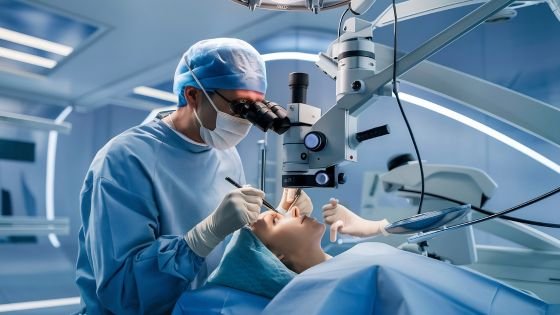
Modern cataract surgery uses a technique called phacoemulsification, where an ultrasound probe breaks up the cloudy lens through a micro-incision of roughly 2–3 millimetres, and the pieces are aspirated out. A foldable artificial intraocular lens (IOL) is then inserted through the same tiny incision, which self-seals without stitches.
The entire procedure typically takes 15 to 20 minutes and is performed under local anaesthesia as a day-care procedure. What has transformed the field in recent years is the range of premium IOL options now available, multifocal lenses that restore both distance and near vision simultaneously, toric lenses that correct pre-existing astigmatism, and extended depth-of-focus (EDOF) lenses that provide a continuous range of clear vision.
The choice of IOL is a deeply personal one, influenced by your lifestyle, occupation, and visual demands, and is best made in a detailed discussion with your surgeon.
At Eyecure Hospital, our cataract solutions use modern phacoemulsification with premium IOL options suited to each patient’s lifestyle needs. Dr. Divya P. Bachu and Dr. Sushanth Bachu guide every patient through the IOL selection process to ensure the best possible visual outcome after surgery.
2. LASIK and Advanced Laser Vision Correction
LASIK (Laser-Assisted In Situ Keratomileusis) remains one of the most life-changing elective procedures available at eye hospitals in Hyderabad. It is designed for people who are tired of glasses or contact lenses and want clear, unaided vision, whether for the convenience of waking up and seeing clearly, or for professional requirements in fields like aviation, defence, or sports.
The procedure works by reshaping the cornea, the transparent front surface of the eye, using an excimer laser, which corrects the way light focuses on the retina. In the standard LASIK procedure, a thin flap is first created on the corneal surface (either with a microkeratome blade or, in the bladeless ‘Femto-LASIK’ variant, with a femtosecond laser), folded back, and the underlying stroma is reshaped with precision. The flap is then repositioned, adhering naturally without sutures.
Recovery is rapid; most patients see clearly within 24 hours. For patients whose corneal thickness or topography makes them unsuitable for standard LASIK, alternatives like LASEK, PRK, SMILE (Small Incision Lenticule Extraction), or implantable collamer lenses (ICL) are considered. The best eye hospitals in Hyderabad offer the full menu of refractive options, including wavefront-guided treatments that customise the laser correction to the unique aberrations of your individual eye.
At Eyecure Hospital: Eyecure Hospital offers cornea and LASIK laser services with a thorough pre-surgical evaluation to determine your suitability. Not every patient is a candidate, and we believe in honest counselling over rushed surgical decisions.
3. Glaucoma Management, Detection, Medication, Laser, and Surgery
Glaucoma is the world’s leading cause of irreversible blindness, and its prevalence in India is particularly high. What makes it so dangerous is its silence; most forms of glaucoma cause no pain, no redness, and no visible symptoms until the optic nerve damage is already significant. By the time peripheral vision loss becomes noticeable to the patient, up to 40 percent of optic nerve fibres may already be gone.
The good news is that modern glaucoma management is highly effective when the condition is detected early. The diagnostic toolkit available at a well-equipped Hyderabad eye hospital today includes Goldmann applanation tonometry for measuring intraocular pressure, pachymetry to measure corneal thickness (which affects pressure readings), gonioscopy to examine the drainage angle, optical coherence tomography (OCT) to assess optic nerve fibre layer thickness, and automated perimetry to map the visual field.
Together, these tools allow ophthalmologists to diagnose glaucoma well before the patient notices any vision loss. Treatment begins with medicated eye drops that either reduce aqueous humour production or improve its drainage. When drops alone are insufficient, laser procedures, particularly selective laser trabeculoplasty (SLT) for open-angle glaucoma or laser peripheral iridotomy (LPI) for angle-closure glaucoma, can supplement or replace medication.
For advanced cases, surgical options including trabeculectomy or tube-shunt procedures create new drainage pathways to reduce pressure. The goal in every case is the same: halt progression and preserve the vision that remains.
At Eyecure Hospital: Glaucoma management at Eyecure Hospital includes regular IOP monitoring, optic nerve assessment, and a personalised treatment plan. Early detection is our priority, which is why we encourage anyone over 40 or with a family history of glaucoma to schedule a preventive screening.
4. Retina Treatments, Laser, Injections, and Vitreoretinal Surgery
The retina is the light-sensitive tissue that lines the back of the eye and converts what you see into electrical signals that the brain can interpret. Retinal diseases are among the most complex and most vision-threatening conditions managed at eye hospitals today. They include diabetic retinopathy, age-related macular degeneration (AMD), retinal vein and artery occlusions, retinal tears and detachments, macular holes, and epiretinal membranes.
The treatment landscape for retinal disease has been transformed in the last 15 years, largely due to two advances. The first is intravitreal anti-VEGF therapy, injections of drugs like ranibizumab, bevacizumab, or aflibercept directly into the vitreous cavity of the eye, which block the growth of abnormal blood vessels in conditions like wet AMD and diabetic macular oedema.
These injections have saved the central vision of millions of patients who would previously have gone blind. The second advance is ultra-wide field retinal imaging and high-resolution OCT, which allows retina specialists to detect and monitor disease with unprecedented detail without any invasive procedure. For structural retinal problems, detachments, vitreous haemorrhage, macular holes, vitreoretinal surgery (vitrectomy) remains the gold standard.
A vitrectomy involves removing the vitreous gel from the eye and operating directly on the retinal surface, using instruments smaller than a millimetre in diameter. The best eye hospitals in Hyderabad have dedicated retina units with these surgical capabilities.
At Eyecure Hospital: At Eyecure Hospital, our retina Surgery care programme addresses the full range of posterior segment conditions. Given the time-sensitive nature of many retinal emergencies, particularly detachments, we advise any patient experiencing sudden floaters, flashes, or a shadow across their vision to contact us immediately at +91 95048 58687.
5. Corneal Treatment and Transplantation
The cornea is the clear, dome-shaped front surface of the eye that provides roughly 70 percent of the eye’s total focusing power. When the cornea is damaged by infection, injury, dystrophy, or degenerative disease, the resulting loss of clarity and regularity can severely impair vision in ways that glasses cannot correct.
Common corneal conditions treated at eye hospitals include keratoconus (a progressive thinning and cone-like bulging of the cornea), Fuchs’ endothelial dystrophy (where the cells lining the inner corneal surface degenerate), corneal scarring from previous infection or injury, and pterygium (a fleshy growth from the conjunctiva that encroaches onto the cornea).
Treatments range from rigid gas-permeable contact lenses and corneal cross-linking (which uses UV light and riboflavin to halt the progression of keratoconus) to partial and full corneal transplantation. Modern partial-thickness transplant techniques, DSAEK and DMEK for endothelial disease, DALK for anterior stromal disease, have largely replaced full-thickness penetrating keratoplasty for many conditions, offering faster recovery and lower rejection rates.
At Eyecure Hospital, Corneal care is a key specialty. Whether you have been diagnosed with keratoconus, have a corneal scar affecting your vision, or need a pterygium removal, our team can assess your options and recommend the most appropriate course of treatment.
6. Paediatric Ophthalmology, Squint, Amblyopia, and Children’s Vision
Children’s eye conditions require a fundamentally different approach from adult ophthalmology, both diagnostically and therapeutically. A child cannot reliably report blurred vision, double vision, or difficulty reading, and yet undetected vision problems during the critical developmental years can have lifelong consequences. The brain’s visual cortex is most plastic, most capable of developing, between birth and roughly eight years of age.
If clear, well-focused images are not reaching both eyes during this window, the result is amblyopia (‘lazy eye’), where one eye’s visual pathway fails to develop properly and visual acuity is permanently reduced.
Common paediatric conditions managed at top eye hospitals in hyderabad include amblyopia treatment (patching the stronger eye to force the weaker one to work), strabismus (squint) correction through glasses, exercises, or surgery to realign the eyes, refractive errors in children (which require proper cycloplegic refraction, not just a standard adult examination), congenital cataract, congenital glaucoma, and retinopathy of prematurity (ROP) in premature infants.
The key principle in paediatric ophthalmology is that early detection makes an enormous difference; a squint that looks like a cosmetic issue at age three may be causing profound amblyopia that is entirely treatable now but becomes progressively harder to reverse after the age of seven.
At Eyecure Hospital: Eyecure Hospital provides comprehensive eye care for both children and adults. If you notice that your child squints, turns their head to one side when looking at things, sits too close to the television, or seems to struggle at school despite adequate intelligence, an early eye examination is strongly recommended.
7. Oculoplastic and Orbital Surgery
The structures surrounding the eye, the eyelids, the tear drainage system, the orbit (eye socket), and the surrounding facial tissue are the domain of oculoplastic surgery. It sits at the intersection of ophthalmology and plastic surgery, and while less commonly discussed than LASIK or cataract surgery, it addresses conditions that can be genuinely sight-threatening or significantly impact quality of life.
Common oculoplastic procedures available at well-equipped eye hospitals include ptosis repair (correcting a drooping eyelid that may obstruct vision or affect appearance), entropion and ectropion correction (where eyelids turn inward or outward, causing irritation and corneal damage), dacryocystorhinostomy (DCR) for blocked tear ducts, removal of benign and malignant eyelid tumours, enucleation or evisceration for blind, painful eyes and prosthetic eye fitting, and orbital decompression for thyroid eye disease.
While not every eye hospital in Secunderabad will offer the full range of oculoplastic services, specialist centres and larger Hyderabad eye hospital networks increasingly have dedicated oculoplastic surgeons on their teams.
At Eyecure Hospital, for patients needing oculoplastic assessment in Secunderabad, our team at Eyecure Hospital can evaluate your condition and, where necessary, refer you to the most appropriate specialist within our network.
8. Dry Eye Disease and Digital Eye Strain Management
In 2026, dry eye disease has become one of the most prevalent ocular surface conditions globally, and Hyderabad’s working population, with its concentration of IT professionals and remote workers spending eight or more hours daily in front of screens, is no exception. Dry eye disease occurs when the tear film, which must coat and protect the corneal surface with every blink, is either inadequate in quantity or abnormal in quality. The result is persistent burning, grittiness, fluctuating blurry vision, and a paradoxical tendency to water excessively.
Modern dry eye management goes far beyond ‘use artificial tears’. A thorough dry eye workup at a specialist centre includes meibomian gland imaging (to assess the oil-producing glands along the eyelid margin that prevent tear evaporation), tear osmolarity testing, tear film break-up time measurement, and corneal staining to assess surface damage.
Treatment is layered: preservative-free artificial tears and lubricant gels for mild cases; anti-inflammatory eye drops (cyclosporine, lifitegrast) for moderate disease; in-office treatments like intense pulsed light (IPL) therapy or LipiFlow thermal pulsation to unblock meibomian glands in more severe cases; and punctal plugs to retain natural tears.
Digital eye strain, technically a separate entity from dry eye but closely related, is managed through the 20-20-20 rule, blue-light strategies, optimised screen ergonomics, and prescription glasses designed for intermediate distance use.
At Eyecure Hospital: Eyecure Hospital offers consultations for dry eye and digital eye strain, which are increasingly common among Hyderabad’s working population. A proper assessment takes less than 30 minutes and can dramatically improve your daily comfort.
How to Choose the Right Eye Hospital in Hyderabad for Your Needs
With so many options available, from large multi-speciality hospitals to dedicated standalone eye centres, choosing where to seek care can itself feel overwhelming. A few practical principles can guide the decision well.
Match the treatment to the speciality: Not every eye hospital in Hyderabad offers every treatment. A centre with excellent LASIK outcomes may not have a vitreoretinal surgeon on staff. Before committing to a hospital, verify that it has specific, demonstrable experience in the exact treatment you need.
Prioritise continuity of care: Ophthalmology is a specialty where follow-up matters enormously. A glaucoma patient needs regular IOP checks and visual field testing, potentially for life. A retina patient on anti-VEGF injections may return monthly. Choose a centre where you will consistently see the same ophthalmologist, not a rotation of residents.
Evaluate diagnostic equipment, not just surgical capability: The sophistication of a hospital’s diagnosis often matters as much as its surgical skill. OCT, corneal topography, visual field analysers, and wide-field retinal cameras are tools that enable accurate diagnosis and treatment monitoring. When visiting a hospital for the first time, it is entirely reasonable to ask what diagnostic equipment they have available for your condition.
Consider accessibility alongside quality: The best eye hospital for you is the one you will actually attend for follow-up appointments. An eye hospital in Secunderabad that is 15 minutes from your home will serve you better, practically speaking, than a prestigious centre across the city that you will avoid visiting due to the travel involved.
Your Vision Deserves Specialist Care – Start with the Right Conversation
The range of treatments available at eye hospitals in Hyderabad today is genuinely remarkable. Conditions that meant irreversible blindness a generation ago are now manageable. Procedures that once required general anaesthesia and a week in hospital are now day-care procedures completed in under 30 minutes. The city’s ophthalmological infrastructure, from the diagnostic equipment to the surgical expertise to the post-operative care, is among the best in the country.
But all of that capability is only valuable if you use it. The single most common thread in preventable vision loss is delay, waiting to see if a symptom resolves, postponing a routine check because life is busy, assuming that an eye issue is minor until it unmistakably is not. Every treatment described in this guide works best and costs least when it is applied early.