

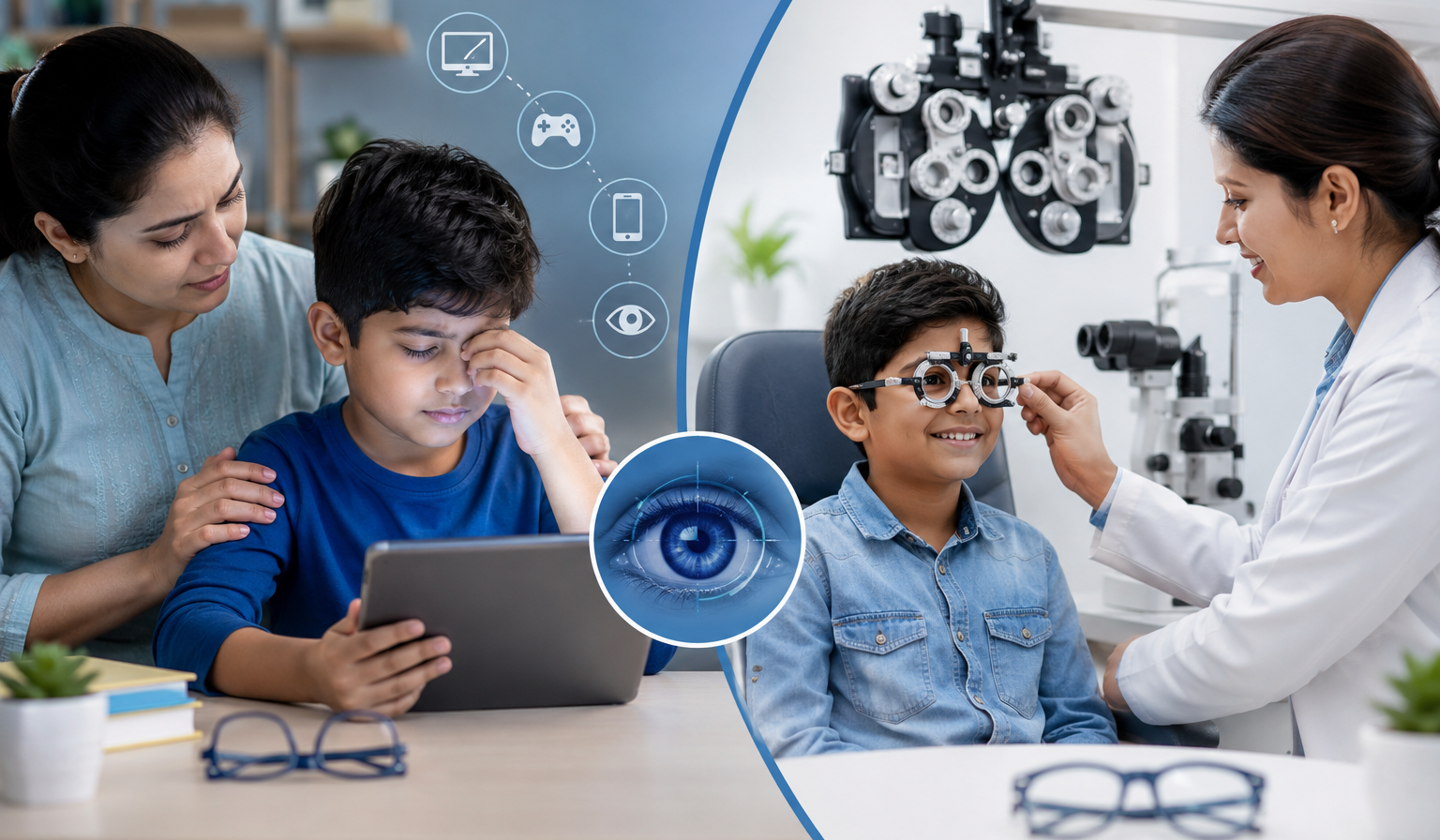
In today’s digital world, screens have become an unavoidable part of childhood. From online classes and educational apps to video games and entertainment, children spend more time in front of digital devices than ever before. While technology offers many benefits, excessive screen exposure can significantly affect children’s eye health.
Many parents notice their children rubbing their eyes frequently, complaining of headaches, blinking excessively, or struggling to focus after prolonged screen use. These symptoms are becoming increasingly common among school-aged children.
Understanding how screen time impacts vision is essential for protecting your child’s long-term eye health. In this guide, we’ll explain the risks, warning signs, preventive measures, and when professional eye care may be needed.
Why Screen Time Is Increasing Among Children
Digital devices are now integrated into almost every aspect of a child’s daily routine:
- Online learning platforms
- Educational applications
- Smartphones and tablets
- Television and streaming services
- Video gaming
- Social media usage among older children
According to pediatric vision experts, many children spend significantly more hours on screens than recommended, increasing the risk of eye strain and vision-related problems.
How Excessive Screen Time Affects Children’s Eyes
1. Digital Eye Strain
Digital Eye Strain, also called Computer Vision Syndrome, occurs when children focus on screens for extended periods without adequate breaks.
Common symptoms include:
- Eye fatigue
- Burning sensation
- Dry eyes
- Blurred vision
- Difficulty focusing
- Headaches
Unlike reading a book, screens require constant focusing adjustments, making the eye muscles work harder.
2. Increased Risk of Myopia (Nearsightedness)
One of the biggest concerns among eye specialists worldwide is the rapid rise in childhood myopia.
Research suggests that excessive near-work activities, including prolonged screen use, combined with limited outdoor time, may contribute to the development and progression of myopia.
Children with myopia often:
- Squint while viewing distant objects
- Sit very close to screens
- Struggle to see classroom boards
- Experience frequent eye strain
Early detection is crucial to prevent worsening vision problems.
3. Reduced Blinking and Dry Eyes
Normally, humans blink about 15–20 times per minute. While using screens, this rate often drops significantly.
Reduced blinking can lead to:
- Dry eyes
- Irritation
- Redness
- Discomfort
- Temporary blurred vision
Children may not always communicate these symptoms clearly, making parental observation important.
4. Sleep Disturbances
Screen exposure before bedtime can interfere with healthy sleep patterns.
Digital devices emit blue light, which may affect the body’s natural sleep-wake cycle by reducing melatonin production.
Poor sleep can indirectly affect:
- Eye comfort
- Academic performance
- Concentration
- Overall health
Warning Signs Parents Should Never Ignore
Many children do not realize they have vision problems. Parents should watch for these symptoms:
Physical Signs
- Frequent eye rubbing
- Excessive blinking
- Watery eyes
- Red eyes
- Sensitivity to light
Behavioral Signs
- Holding devices very close
- Sitting close to the television
- Tilting the head while reading
- Reduced interest in reading
- Complaints of headaches
Academic Signs
- Difficulty concentrating
- Poor reading performance
- Frequent loss of place while reading
- Reduced classroom participation
If these symptoms persist, a comprehensive eye examination is recommended.
The 20-20-20 Rule: A Simple Habit That Works
Eye specialists frequently recommend the 20-20-20 Rule.
Every 20 minutes:
- Look at something 20 feet away
- For at least 20 seconds
This simple technique helps relax eye muscles and reduces digital eye strain.
Parents can set reminders or use educational apps that encourage screen breaks.
How Much Screen Time Is Safe for Children?
While recommendations vary by age, moderation is key.
Preschool Children (2–5 Years)
- Limit recreational screen use
- Encourage supervised educational content
- Prioritize outdoor play
School-Aged Children
- Balance screen use with physical activity
- Schedule regular breaks
- Maintain proper viewing distance
Teenagers
- Encourage responsible device use
- Limit bedtime screen exposure
- Monitor prolonged gaming sessions
Rather than focusing only on total screen hours, parents should prioritize healthy screen habits.
Practical Tips to Protect Your Child’s Vision
Encourage Outdoor Activities
Studies suggest that spending more time outdoors may help reduce the progression of myopia.
Benefits include:
- Exposure to natural light
- Better distance focusing
- Reduced near-work strain
Aim for at least 1–2 hours of outdoor activity daily when possible.
Maintain Proper Viewing Distance
Children should:
- Hold tablets approximately 18–24 inches away
- Sit at least an arm’s length from computer screens
- Maintain good posture while using devices
Adjust Screen Brightness
Screen brightness should match surrounding lighting conditions.
Avoid:
- Extremely bright screens
- Dark room viewing
- Excessive glare
Promote Frequent Breaks
Encourage:
- Stretching
- Walking
- Looking away from screens regularly
Even short breaks can significantly reduce eye strain.
Ensure Good Lighting
Proper room lighting reduces visual stress.
Avoid:
- Using devices in complete darkness
- Excessive reflections on screens
Schedule Regular Eye Exams
Routine eye examinations help identify vision issues before they affect learning and development.
Early diagnosis often leads to better treatment outcomes.
When Should Parents Visit an Eye Specialist?
Seek professional eye care if your child experiences:
- Persistent headaches
- Blurred vision
- Squinting
- Difficulty seeing distant objects
- Eye discomfort after screen use
- Frequent eye rubbing
- Sudden changes in vision
Early intervention can prevent many vision problems from becoming more serious.
Why Regular Pediatric Eye Exams Matter
Children’s eyes continue developing throughout childhood.
Comprehensive eye exams can detect:
- Refractive errors
- Myopia progression
- Eye coordination problems
- Lazy eye (Amblyopia)
- Eye alignment issues
- Early signs of glaucoma and other eye conditions
Routine screenings are essential even if no obvious symptoms are present.
Expert Eye Care for Children at Eyecure Hospital
At Eyecure Hospital, we understand the growing impact of digital lifestyles on children’s vision.
Our experienced eye specialists provide:
- Comprehensive pediatric eye examinations
- Myopia management solutions
- Digital eye strain assessments
- Vision correction guidance
- Preventive eye care counseling for parents
Families searching for the best eye hospital in Secunderabad, best eye clinics in Secunderabad, best eye hospitals in Alwal, best eye hospitals in Bowenpally, best eye hospitals in Karkhana, best eye hospitals near Alwal, and best glaucoma doctors near Secunderabad can benefit from expert consultation and personalized eye care services at Eyecure Hospital.
Frequently Asked Questions (FAQs)
Can screen time permanently damage my child’s eyesight?
Screen time itself does not permanently damage eyesight, but excessive use can contribute to eye strain, discomfort, and may increase the risk of myopia progression.
How can I tell if my child needs glasses?
Signs include squinting, headaches, sitting too close to screens, difficulty seeing distant objects, and poor reading performance.
What is the ideal screen distance for children?
Most eye specialists recommend maintaining a distance of approximately 18–24 inches from digital screens.
Does blue light from screens harm children’s eyes?
Current evidence suggests blue light primarily affects sleep patterns and may contribute to eye fatigue rather than causing permanent eye damage.
How often should children have an eye examination?
Children should undergo regular eye examinations based on age and risk factors. Your eye specialist can recommend an appropriate schedule.
Can outdoor activities improve children’s eye health?
Yes. Research suggests increased outdoor time may help slow the progression of myopia and support overall visual development.
Internal Linking Suggestions
Link this article to:
- Signs Your Child Needs an Eye Examination
- Understanding Myopia in Children
- Benefits of Regular Eye Check-Ups
- Common Eye Problems in School-Aged Children
- How to Prevent Digital Eye Strain
- Pediatric Eye Care Services at Eyecure Hospital
External Authority References
Reference credible sources such as:
- American Academy of Ophthalmology (AAO)
- American Association for Pediatric Ophthalmology and Strabismus (AAPOS)
- World Health Organization (WHO)
- National Eye Institute (NEI)
Conclusion
Digital devices are now a part of everyday life, but healthy screen habits are essential for protecting children’s vision. By encouraging regular breaks, outdoor activities, proper screen use, and routine eye examinations, parents can significantly reduce the risk of digital eye strain and other vision-related concerns.
If your child is experiencing headaches, eye strain, blurred vision, or difficulty focusing, don’t wait for symptoms to worsen. Schedule a comprehensive eye examination at Eyecure Hospital and ensure your child’s eyes receive the expert care they deserve.