
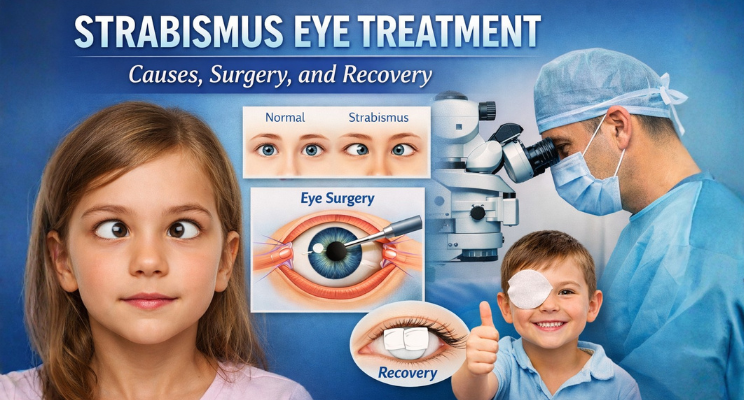
Strabismus, commonly known as crossed eyes, is a condition where both eyes do not align and point in the same direction. Although often noticed in early childhood, it can affect people of all ages and, if left untreated, can lead to problems such as poor vision, double vision, and reduced depth perception.
At Eyecure Hospital, a leading Eye Hospitals in Hyderabad, we offer advanced and comprehensive care for all types of strabismus, from diagnosis to treatment and recovery.
What Is Strabismus?
Strabismus occurs when the eye muscles or the brain’s control over eye movement are out of sync. Normally, both eyes focus together on the same object, allowing clear, single vision. In strabismus, one eye may turn inward (esotropia), outward (exotropia), upward (hypertropia), or downward (hypotropia). This misalignment can be constant or intermittent.
Early diagnosis and treatment are essential to prevent long-term issues such as amblyopia (lazy eye), poor binocular vision, or psychological impact due to aesthetic concerns. Effective eye treatment in Hyderabad is available that can correct misalignment and restore comfortable, coordinated vision.
Causes of Strabismus
Strabismus arises from a range of underlying factors, and understanding these helps guide the best treatment approach:
1. Neuromuscular Control Issues
The most common cause involves a problem with the neurological control of eye muscles; the eyes can’t work together properly due to a coordination issue between the brain and muscles.
2. Refractive Errors and Vision Challenges
Uncorrected refractive errors, such as farsightedness, make the eyes work harder to focus, which may trigger misalignment.
3. Genetic and Developmental Factors
Family history plays a role; children with a relative who has strabismus are more likely to develop the condition themselves.
4. Medical Conditions & Injuries
Certain neurological disorders, head trauma, stroke, or diseases like cerebral palsy and Down syndrome increase the risk of developing strabismus.
Recognizing Strabismus – Symptoms to Watch For
People with strabismus may experience:
- Eyes that turn in different directions
- Double vision (especially in adults)
- Poor depth perception
- Eye strain or headaches
- Squinting or closing one eye in bright light
- Amblyopia (lazy eye) in children
Early evaluation by specialists at an Best Eye Hospital in Hyderabad, such as Eyecure Hospitals, can make a significant difference, especially for pediatric cases.
Treatment Options for Strabismus
Treatment depends on age, severity, and underlying causes. A tailored plan ensures the best outcomes.
1. Non-Surgical Treatments
Not all cases require surgery:
- Glasses or Contact Lenses
Corrective lenses help improve focus and can reduce the effort required from the eye muscles, sometimes improving alignment.
- Prism Lenses
In cases with double vision, prism lenses help bend light so that images align properly.
- Botox Injections
Botulinum toxin temporarily weakens overactive eye muscles to improve alignment in certain scenarios.
- Vision Therapy / Eye Exercises
Orthoptic exercises support coordination and strengthen the eye muscles, especially when combined with other therapies.
2. Strabismus Surgery
When non-surgical methods don’t achieve sufficient alignment, eye muscle surgery becomes the primary option. At Eyecure Hospital, we provide precise surgical care as part of advanced eye treatment in Hyderabad
- Approach:
During strabismus surgery, eye muscles are either tightened, loosened, or repositioned to better align the eyes. This is usually done under general anesthesia, though local anesthesia may be used in selected adult cases.
- Adjustable Sutures:
In certain adult patients, adjustable sutures allow fine-tuning of alignment after the operation for optimal results.
Strabismus surgery typically takes 30 minutes to two hours, depending on complexity, and is often done on an outpatient basis.
- Recovery After Strabismus Surgery
Recovery varies from patient to patient, but most people experience a relatively quick return to daily activities.
What to Expect Post-Operation
- Your eyes may feel sore, red, or scratchy initially.
- Double vision can occur for a few days; this is common and usually temporary.
- Full healing generally takes several weeks, and follow-up care ensures proper alignment.
- Home Care Tips
- Use prescribed eye drops or ointments to prevent infection and reduce inflammation.
- Avoid rubbing eyour yes and stay away from swimming pools or hot tubs during early recovery.
- Resume normal activities gradually, guided by your eye surgeon.
- Follow-Up is Key
Regular follow-up ensures the eyes stay aligned and helps detect any need for additional therapy or refinement. Many patients, especially children, may benefit from additional treatments to support binocular vision improvement.
Why Choose Eyecure Hospital for Strabismus Care?
At Eyecure Hospital, a trusted Eye Hospital in Hyderabad, experienced ophthalmologists deliver advanced strabismus care using the latest techniques. From detailed evaluation and personalized treatment planning to expert surgical execution and recovery support, our team ensures the highest standards of eye treatment and patient comfort.
Whether you’re seeking treatment for your child’s vision or managing adult-onset strabismus, we are dedicated to restoring eye alignment, enhancing visual quality, and improving overall life quality.